
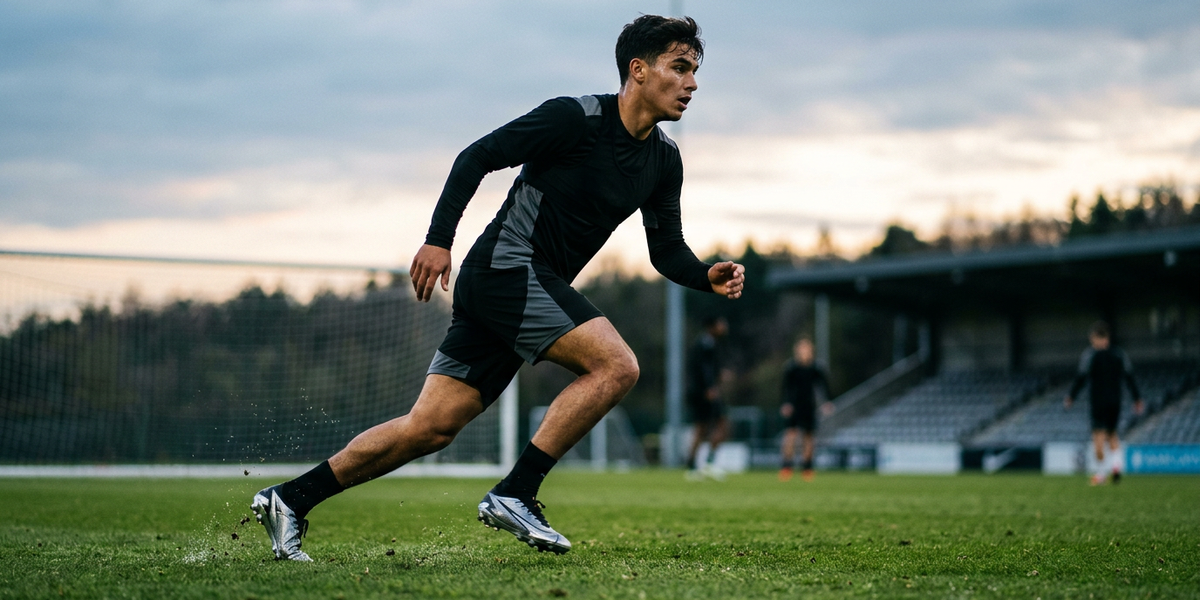
Wingers live on the first three steps, the change of direction and the final ball. The best football boots for wingers in 2026 are light, aggressively studded and thin enough on the upper that you can feel the ball while sprinting. Below is a practical guide to picking a pair for your surface, your foot shape and your budget, plus the boots we actually recommend.
Key takeaways
Prioritise low weight and a responsive soleplate for repeated high speed sprints. Match the soleplate to your surface: FG for firm grass, SG for wet winter pitches, AG for 3G and 4G. Thin, textured uppers give you the ball feel you need in one versus one situations. Wide footed players should look at knit midfoot builds or leather forefoot models rather than the narrowest speed lasts. Second tier versions of elite boots give you the same silhouette for far less money.
What makes a good winger boot in 2026
Every extra gram on your foot costs energy. A winger covering 10 to 12 kilometres a match with dozens of high intensity sprints feels that by the 80th minute, which is exactly when the decisive run usually happens. Most elite speed boots now sit under 200 grams, using carbon fibre or Pebax soleplates that snap back on push off and return a little of the energy you put in.
No boot makes a slow player fast. What a good boot does is remove friction: less weight to swing through, better grip on the first step, and an upper thin enough that your touch at pace stays clean.
Traction matters as much as weight. Chevron and bladed studs bite better for forward propulsion than traditional conical studs, which is why most winger orientated models use them.
Our recommended winger boots
Our current winger picks are pulled straight from the FootballersCV Recommends catalogue, so they stay in sync with what we actually rate right now. Prices and availability change, so always check before buying.
Best boots for pure acceleration
The Nike Mercurial Vapor and Superfly line remains the benchmark for out and out pace. The anatomical soleplate sits you low to the ground and the aggressive stud pattern is built for straight line speed and hard cuts. The Vapor (low cut) is usually the winger pick over the Superfly collar.
adidas has pushed the F50 range hard this season with very thin uppers and a high traction outsole, which suits players who beat a fullback with a first touch and a burst rather than a long dribble.
If you want the boots to pay off, pair them with dedicated speed work. Scouts notice players who have both the gear and the physical output to use it.
Best boots for dribbling and close control
Speed without control just runs the ball out of play. The PUMA Ultra uses a layered, grippy upper that holds the ball well in wet conditions, which helps in tight areas near the corner flag or driving into a busy box.
Thin uppers give your feet more tactile feedback, so you know where the ball is without looking down when you square up a defender. Laceless and offset lacing systems also give a cleaner striking surface for crossing and shooting.
Choosing the right soleplate for your pitch
This is the mistake young players make most often.
| Surface | Soleplate | Notes |
|---|---|---|
| Dry or firm natural grass | FG | The default for most matches and academy pitches |
| Wet, soft winter grass (UK and Ireland) | SG | Metal tipped studs stop the slipping that ruins acceleration |
| 3G and 4G artificial turf | AG | Shorter hollow studs reduce the grab that causes knee and ankle injuries |
| Indoor or hard court | IN or TF | Never wear studded boots on these surfaces |
Wearing FG boots on artificial turf is the single riskiest habit in youth football. The studs catch in the carpet instead of releasing, and that torque goes straight through the knee. If you play regularly on 3G, own a dedicated AG pair.
Turning up to a trial with the correct boots for the surface signals tactical maturity before you kick a ball.
Best boots for wingers with wide feet
Most speed boots are built on a narrow last, which causes blisters and nail damage for broader footed players. You do not have to accept a heavy boot to get width. Look for models with a knit midfoot, a leather forefoot that stretches with wear, or brands that offer a wider fit option in the same silhouette.
Leave roughly a thumb width at the toe so your foot can expand during exercise. A boot that is too tight restricts blood flow and your touch drops off in the second half.
Synthetic or leather
| Synthetic | Leather | |
|---|---|---|
| Weight | Lighter, stays light when wet | Slightly heavier, can absorb water |
| Touch | Sharp and direct, often textured | Plush and dampened |
| Fit | Consistent from day one | Moulds to your foot over time |
| Best for | Pure pace and wet weather | Comfort and wider feet |
Many current models split the difference with a leather or leather blend forefoot on a lightweight synthetic rear and plate, which is a strong compromise for a technical winger.
Weight, fatigue and the last fifteen minutes
Games turn in the final quarter. An extra 50 to 100 grams per foot feels like nothing in the warm up, but after thousands of steps it raises the metabolic cost of every stride. Lighter boots help you hold leg speed when you need that final run onto a cross. There is a confidence effect too, and in a game of fine margins that is worth having.
Looking after them
Boots are an investment, so treat them like one. Brush off mud after every session with a soft brush and lukewarm water. Never use a washing machine, and never dry them on a radiator, because the heat wrecks the adhesives and warps the soleplate. Condition leather occasionally to keep it supple, and keep the soleplate clean so traction stays honest.
Expect a full season from an elite pair with normal use, or six to eight months if you train and play five days a week. Once the upper overstretches or the studs round off, performance drops.
Getting seen once you have the right gear
Boots help you produce the moments. A profile is what gets those moments in front of the people who matter. Scouts filter players digitally long before they travel to a match, so your sprint numbers, assists, minutes and highlights need to exist somewhere they can find them.
Build a free player profile on FootballersCV, add your clips and your stats, and give scouts a reason to watch you live.
Frequently asked questions
How much does boot weight really matter for a winger?
It matters. Boots under 200 grams reduce fatigue over 90 minutes and make repeated sprints cheaper metabolically. It will not turn a slow player quick, but it protects the speed you already have late in games.
Is synthetic or leather better for wingers?
Synthetic for most wingers, because it stays light in the wet and holds its shape. Choose leather or a leather forefoot blend if you have wide feet or prefer a softer touch.
Can I wear firm ground boots on artificial grass?
You should not. FG studs can catch in 3G and 4G surfaces and cause knee and ankle injuries. Use an AG soleplate with shorter hollow studs.
How often should I replace my match boots?
Roughly once a season with normal use, or every six to eight months if you play and train most days. Replace them sooner if the studs round off or the upper stretches out.
What are the best affordable boots for young wingers?
Second tier versions of elite models, such as the Nike Mercurial Vapor Academy or Pro and the adidas F50 League. Same shape and stud pattern, more durable materials, far lower price.
Do I need different boots for training and matches?
If you can afford it, yes. Keeping one pair for matches makes the studs and upper last much longer and gives you a consistent feel on match day.