
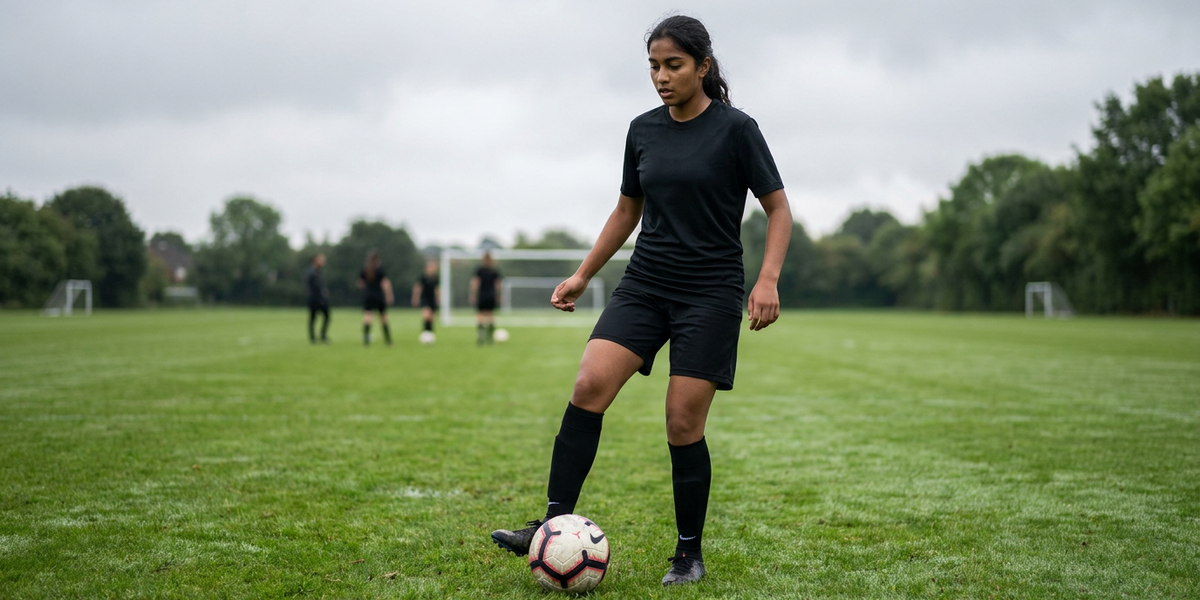
Choosing the best football boots for goalkeepers this season
The best football boots for goalkeepers must prioritize lateral stability, maximum traction for explosive dives, and a clean striking surface for long goal kicks. Unlike outfield players who may focus purely on speed or dribbling feel, a goalkeeper requires a stiff soleplate to generate push off power and a durable upper to withstand the impact of landing. In 2026, the most effective goalkeeper cleats combine traditional protection with modern lightweight technology to ensure the number one remains agile yet secure in the penalty area.
Choosing the right footwear is a technical decision that affects how you command your box. A slip during a cross or a weak plant foot during a clearance can be the difference between a clean sheet and a goal conceded. Professional scouts and academy coaches look for players who understand these fine margins. When you build a football CV, having the right equipment shows you are serious about your development and peak performance levels in high pressure situations.
Key takeaways
Prioritize Soft Ground metal studs for natural grass to ensure zero slippage during critical lateral saves. Look for boots with a stiff midfoot and supportive heel counter to protect against ankle rolls during heavy landings. Choose a boot with a clean strike zone or textured upper to improve accuracy and distance on goal kicks and punts. Leather or premium synthetic uppers provide the best balance of comfort for standing and protection during physical collisions in the box.
Why goalkeepers need specific boot features for shot stopping
Goalkeeping is a game of explosive movements followed by periods of relative inactivity. This unique physiological demand means your boots must perform two distinct roles. First, they must provide comfort and warmth while you are standing for long stretches watching the play at the other end. Second, they must respond instantly when a shot is fired towards the corner. The best boots for shot stopping are those that offer a secure lockdown, ensuring your foot does not slide inside the boot when you shift your weight rapidly.
The lateral movement required to cover the goal frame puts immense strain on the sides of the boot. While a winger might want the thinnest material possible for ball feel, a goalkeeper needs a bit more substance. Modern boots like the Adidas Predator or the Nike Tiempo Legend 10 offer reinforced zones that help maintain the shape of the boot during these sideways forces. This structural integrity allows the goalkeeper to trust their equipment when pushing off the turf for a fingertip save.
Furthermore, the strike zone is critical for the modern sweeper keeper. You are often the starting point of the attack, requiring precise long balls to find wingers or target men. Boots with a wide, clear striking area or small rubberized elements can help add grip to the ball, especially in wet conditions. This ensures that even under pressure from an oncoming striker, your clearances are powerful and accurate, which is a key trait noted by scouts when they review your highlight video tips.
The importance of traction and stud patterns for explosive dives
Traction is the foundation of every goalkeeper performance. If you cannot plant your foot firmly, you cannot generate the power needed to reach the top corner. This is why the question of whether goalkeepers need special studs is so important. On natural grass, a Mixed Stud or Soft Ground (SG) configuration is almost always the preferred choice. These typically feature longer metal tipped studs that penetrate deep into the soil, providing a level of grip that standard Firm Ground (FG) plastic studs cannot match on damp or soft surfaces.
When you look at what boots pro goalkeepers wear in the Premier League or MLS, you will notice they rarely wear pure FG boots on grass. They need to know that when they load their leg for a dive, the ground will not give way. A slip in the six yard box is often catastrophic. For artificial turf, however, goalkeepers must switch to AG (Artificial Grass) specific plates. Using SG studs on 3G or 4G pitches is dangerous as the metal can catch in the carpet, leading to severe knee or ankle injuries.
The pattern of the studs also matters for goalkeepers. Circular or conical studs in the forefoot allow for easier rotation, which is vital when you need to pivot quickly to recover a rebound. Bladed studs can offer more aggressive grip for straight line sprints but can sometimes feel too stuck when trying to turn. A hybrid soleplate that combines rounded studs for pivoting and bladed studs for braking and acceleration offers the most well rounded performance for a modern goalkeeper.
Upper materials and the impact on goal kicks and clearances
The material of your boot upper dictates how you feel the ball and how much protection you have. Traditionally, goalkeepers preferred K leather for its natural dampening properties and its ability to mold to the foot. In 2026, many brands have moved toward high quality synthetic alternatives like Nike FlyTouch Plus or Adidas HybridTouch. These materials offer the soft feel of leather but do not absorb as much water, keeping the boot lightweight even in a downpour. Lightweight boots for quick reactions are a major trend, as every gram saved can theoretically improve your agility.
For a goalkeeper, the upper also acts as a shield. When you are brave and dive at the feet of an attacker, your feet are exposed to potential stamps and collisions. A slightly thicker upper or one with strategically placed padding can help mitigate the pain of these impacts. This is why many keepers still gravitate toward the "control" category of boots rather than the ultra thin "speed" boots. The extra layer provides a sense of security when coming out for 50 50 balls.
Additionally, the texture on the upper can assist with ball handling. While you primarily use your hands, your feet are your secondary tools. The latest grip technologies, such as the High Definition Grip on the Adidas Predator, are not just for curling shots into the net. They help a goalkeeper control a difficult backpass or add extra zip to a side volley clearance. Having that extra friction between the boot and the ball is a massive advantage when playing out from the back under high intensity pressure.
Protecting the goalkeeper with stability and lockdown features
Stability is perhaps the most underrated aspect of goalkeeper footwear. When you land from a high jump to claim a cross, your ankles and knees absorb a tremendous amount of force. A boot with a weak heel counter or a flimsy midfoot can cause your foot to roll, leading to sprains. The best goalkeeper cleats feature an external or reinforced internal heel counter that locks the rear of the foot in place. This prevents internal slippage and ensures that the boot and foot move as a single unit.
Lockdown is also achieved through the lacing system. While laceless boots have become popular for their clean striking surface, many professional goalkeepers still prefer a traditional lacing system. Laces allow you to customize the tightness across different parts of your foot, ensuring a snug fit that does not loosen during the match. A secure fit is essential when you are making micro adjustments to your positioning in the goal mouth, as any movement inside the boot can cause a delay in your reaction time.
Mid cut collars are another feature to consider. While they do not necessarily prevent ankle sprains, they do provide a psychological sense of security and help keep debris out of the boot. For a goalkeeper who is constantly diving into the dirt or turf, keeping the inside of the boot clean is a matter of comfort. A stable, well fitting boot allows you to focus entirely on the ball rather than worrying about your footing, which is crucial for maintaining a high level of performance throughout the full ninety minutes.
Best football boots for goalkeepers with wide feet in 2026
Finding the best goalkeeper boots for wide feet can be a challenge in an era where many boots are designed with a narrow, aerodynamic profile. However, several models remain excellent choices for players who need more volume in the midfoot and toe box. The New Balance 442 V2 Pro is a standout option, known for its premium leather construction and accommodating fit. It provides a classic feel with modern performance, making it a favorite for keepers who prioritize comfort and a natural touch.
Another strong contender is the Puma Future series. The FuzionFit360 technology uses a stretchy knit material that adapts to various foot shapes, including wider profiles. This boot offers a highly customizable lacing system, allowing you to tighten or loosen specific areas to find the perfect fit. For goalkeepers, the Puma Future provides a great balance of agility and comfort, ensuring that wide footed players do not have to squeeze into restrictive boots that cause cramping or blisters.
The Adidas Copa Pure is also a top pick for wide feet. By using a quilted Fusionskin leather, Adidas has created a boot that is both soft and stable. The leather naturally stretches over time to match the contours of the foot, providing a bespoke fit that synthetic boots often lack. Goalkeepers with wide feet should avoid the ultra narrow speed silos like the Nike Mercurial, which can cause discomfort and reduce the stability needed for high impact goalkeeper movements.
Lightweight boots versus traditional leather for quick reactions
There is a constant debate in the goalkeeper community between the benefits of lightweight boots and the reliability of traditional leather. Lightweight boots, often weighing less than 200 grams, are designed to make you feel faster on your feet. For a goalkeeper who relies on twitch reflexes and rapid footwork, reducing the weight of the footwear can provide a perceived advantage in speed and agility. Boots like the Mizuno Alpha or the Adidas X Crazyfast are examples of this philosophy, focusing on minimal weight and maximum response.
On the other hand, traditional leather boots offer a level of comfort and protection that many keepers find irreplaceable. The dampened feel of leather is excellent for controlling the ball, and the natural material provides a better barrier against impact. While they may be slightly heavier, the difference is often negligible for a position that does not require long distance sprinting. Most pro goalkeepers find a middle ground, choosing boots that incorporate modern lightweight soleplates with more substantial and protective uppers.
Ultimately, the choice depends on your personal style of play. If you are a proactive goalkeeper who likes to sweep outside the box and participate in quick transitions, a lighter boot might suit your needs. If you are a traditional shot stopper who dominates the six yard box and faces a lot of physical contact, the protection and stability of a leather or padded synthetic boot will likely be more beneficial. The goal is to find a boot that makes you feel confident and ready to react to any situation.
How to choose boots for different playing surfaces and weather
A serious goalkeeper should ideally have at least two pairs of boots in their kit bag to account for different playing conditions. The most common mistake young players make is wearing the same pair of boots for every game and training session, regardless of the surface. For natural grass, having a dedicated Soft Ground (SG) pair for wet days and a Firm Ground (FG) pair for dry, hard summer pitches is essential. This ensures you always have the correct level of grip to perform your job effectively.
In 2026, many clubs and academies are moving toward high quality artificial surfaces. As mentioned earlier, wearing SG studs on these surfaces is a major safety risk. An Artificial Grass (AG) specific soleplate features more numerous, shorter studs that are hollowed out to reduce heat buildup and prevent the foot from sticking too firmly in the turf. For goalkeepers, AG boots provide a consistent level of traction that allows for safe lateral movement and reduces the risk of long term joint issues caused by improper footwear.
Weather also plays a role in your choice of upper material. In rainy climates, synthetic boots are often superior because they do not become heavy or waterlogged. Leather boots require more maintenance, including regular cleaning and the application of leather cream to prevent them from stiffening after they dry. If you play in a region with frequent rainfall, look for boots with a "waterproof" or "all conditions control" coating that helps maintain a consistent touch on the ball even when it is slippery.
Advice for parents on youth goalkeeper equipment and growth spurts
For parents of young goalkeepers, balancing the need for high quality equipment with the reality of rapid growth spurts is a common challenge. It is tempting to buy boots that are a size too big to "grow into," but for a goalkeeper, this can be dangerous. Loose boots increase the risk of slipping inside the footwear, which can lead to ankle injuries during dives or jumps. It is better to find a boot that fits snugly now, even if it needs to be replaced sooner than an outfield player's boots.
When choosing boots for a developing player, look for models with forgiving upper materials. A soft synthetic or a partial leather upper will offer some stretch as the foot grows, providing a bit more longevity than a rigid, plastic like material. Brands often offer "Academy" or "Team" level versions of their top tier boots. These are usually much more affordable while still offering the essential stability and grip features required for a goalkeeper. They are a practical choice for parents who need to replace boots every few months.
Education on boot care can also save money. Teaching your child to clean their boots after every session, especially if they are playing on muddy grass, will extend the life of the materials and maintain the effectiveness of the studs. A well maintained pair of mid range boots will often perform better than a neglected pair of elite boots. As the player reaches the ages of 13 to 18 and enters more competitive environments, investing in the specific stud patterns for different surfaces becomes more important for both performance and injury prevention.
Building your professional image from the ground up
Your choice of equipment is one of the first things a scout or coach notices when they watch you live or on film. Wearing the correct boots for the surface and maintaining them well shows a level of professionalism and attention to detail that is expected at the academy level. It signals that you take your role as the last line of defense seriously and that you are prepared for the physical demands of the position. Combined with a clean kit and well maintained gloves, your footwear completes a professional image.
Once you have the right gear and are performing at your best, you need a way to showcase that to the wider football world. Having the best football boots for goalkeepers helps you make those highlight reel saves, but those saves only matter if the right people see them. Creating a digital presence is the next logical step in your career. You can how to get a trial by ensuring your profile is up to date with your latest stats, height, reach, and video evidence of your shot stopping ability.
In the competitive landscape of 2026, every advantage counts. From the studs on your feet to the quality of your video highlights, every detail contributes to your success. By choosing footwear that provides the grip, stability, and power you need, you are setting yourself up to dominate your area and catch the eye of scouts. Take the time to research, try on different models, and invest in the tools that will help you reach the next level of the game.
Your journey to the professional ranks starts with preparation. Make sure you are equipped for success this season and beyond. By focusing on the technical requirements of the goalkeeper position, you can ensure that when your big moment comes, your feet are firmly planted and you are ready to make the save that changes your career.
Sign up for your free profile and start your journey toward a professional career in 2026.
Create your professional player profile now
Having the best gear is only half the battle; the next step is making sure the football world knows who you are. Join thousands of ambitious players worldwide who use our platform to connect with clubs and scouts.