
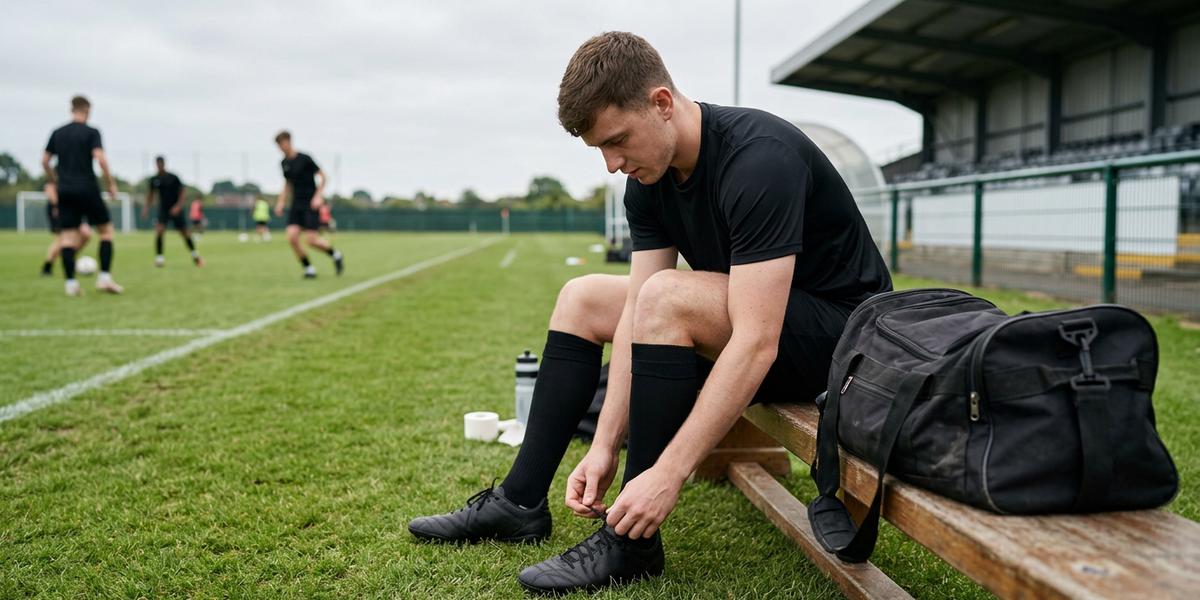
Preparation defines professional performance
When you arrive at a Premier League academy like Chelsea or an MLS team like LA Galaxy for a trial, your first impression starts long before you touch the ball. Coaches and scouts watch how you enter the facility, how you carry yourself, and how prepared you are for the session. A player who forgets their shin guards or shows up with the wrong footwear is immediately flagged as unprofessional. Professionalism is a mindset that begins at home while you are packing your bag. This season, the competition for spots in Category One academies and top tier college programs is higher than ever, and small margins make the difference.
Packing a football trial kit bag essentials list is not just about having the gear. It is about removing potential distractions so your mind can focus entirely on the pitch. If you are worried about a blister because you forgot your tape, or if you are dehydrated because you only brought a small bottle of water, your performance will suffer. This guide breaks down exactly what needs to be in your bag to ensure you are ready for any weather, any surface, and any situation that arises during your trial. We look at the specifics that separate the amateurs from the players who are ready to sign a professional contract.
Key takeaways
Always pack two pairs of boots to cover different pitch surfaces like firm ground and soft ground. Maintain a professional appearance with clean, neutral training gear and essential safety equipment like shin guards. Prioritize nutrition and hydration with electrolyte drinks and slow release carbohydrates to sustain high energy. Carry copies of your football CV and identification to prove your eligibility and background to scouts immediately. Organize your bag logically so you can find gear quickly during short breaks in high pressure environments.
Footwear and secondary boot options
The most critical item in your bag is your footwear. Do not rely on one pair of boots. Weather conditions in the UK or the Pacific Northwest can change in minutes, turning a firm pitch into a slippery surface. You should always carry a pair of Firm Ground (FG) boots and a pair of Soft Ground (SG) boots with metal studs. If the trial is being held on a 3G or 4G artificial surface, ensure you have specific AG boots. Using blades or long metal studs on artificial turf is not only dangerous for your ankles but is often banned by many club facilities.
Ensure your boots are broken in before the trial day. Never wear a brand new pair of boots for the first time at an academy trial. This is a common mistake that leads to blisters and discomfort, which will ruin your movement during agility drills or game situations. If you are serious about how to get a trial, you must treat your tools with respect. Clean your boots the night before so they look brand new. A scout at a club like Manchester City or Borussia Dortmund will notice a player who takes care of their equipment. It shows a level of discipline that coaches look for in young prospects.
Training apparel and weather management
Unless the club has specifically told you they will provide a training kit, you should arrive in professional training attire. This usually means a dark, neutral colored shirt and shorts. Avoid wearing kits from other professional clubs. For example, if you are trialing at Arsenal, do not show up wearing a Tottenham or Manchester United shirt. It shows a lack of awareness and respect. Opt for high performance, moisture wicking fabrics that allow for a full range of motion. Tight fitting base layers are also essential for colder mornings to keep your muscles warm and prevent strains.
Weather management is huge. Always pack a lightweight, waterproof windbreaker even if the forecast looks clear. Sitting on the sidelines during a tactical briefing while shivering will drain your energy levels. Additionally, bring a change of clothes for after the session. Putting on dry, clean clothes immediately after a trial helps with your body temperature regulation and makes you feel more comfortable during the post trial debrief with coaches. Pack a small plastic bag to store your sweaty or muddy gear so it does not ruin the rest of your items in the kit bag.
Protection and injury prevention essentials
Shin guards are non negotiable. Every professional trial will require them for the match play and contact drills. Choose guards that are comfortable but offer high impact protection. Some players prefer the smaller, lightweight guards for mobility, but ensure they meet the safety standards of the league you are trialing for. Along with shin guards, keep a roll of high quality sock tape or cohesive bandage in your bag. This is used to keep your guards and socks in place, ensuring you are not constantly adjusting them during the game. This shows the coaches you are prepared for the physical nature of the game.
Inside your medical pouch, you should also have blister plasters like Compeed and a small tube of petroleum jelly or anti chafe balm. Chafing and blisters are the silent killers of a good trial performance. If you feel a "hot spot" on your foot, you need to address it immediately during a break. Having these items on hand saves you from having to ask the club physio, who is often busy with contracted players. Being self sufficient is a trait that scouts admire. It proves you understand the demands of Being a professional athlete and that you know how to look after your body.
Nutrition and hydration for peak performance
Fueling for a trial starts days before, but what you bring in your bag is vital for the day itself. You should have at least two liters of water. Plain water is often not enough for a high intensity three hour session. Use electrolyte powders or tablets to replace the salts lost through sweat. This prevents cramping during the final twenty minutes of a trial game when scouts are looking for players who still have "engines" and high work rates. Avoid high sugar energy drinks that cause a spike and then a massive crash. Stick to sports drinks designed for endurance athletes.
For food, pack simple carbohydrates that are easy to digest. A banana is the classic choice for a reason. Cereal bars or specialized energy gels are also good for a quick boost during half time. After the trial, your body needs protein to begin the recovery process. A protein bar or a pre mixed shake is a great addition to your bag. Remember, some trials involve long travel times. If you have a three hour drive home, having a proper meal packed ensures you start your recovery immediately rather than relying on fast food at a service station, which will hurt your gains.
Personal hygiene and recovery items
After the session, you need to transition from "player mode" to "professional mode." Pack a small towel and a basic hygiene kit including deodorant and shower gel. Many top academies provide showers for trialists, and using them is a good way to show you are comfortable in the club environment. If showers are not available, at least have some wet wipes to clean off the worst of the mud and sweat before your interview or the drive home. Looking clean and tidy when talking to the head of recruitment can leave a lasting positive impression.
Recovery tools like a small massage ball or a portable foam roller can also fit into a large kit bag. If there is a delay in the schedule, using a massage ball to roll out your arches or glutes shows that you are proactive about your physical state. It is these small habits that characterize the elite players at clubs like Ajax or Benfica. You want to be the player who looks like they already belong in a professional environment. Packing these items demonstrates that you take your physical recovery seriously, even during the pressure of a recruitment day.
The trial paperwork and digital identification
In 2026, many clubs use digital systems for registration, but you should always carry physical backups. Keep a folder in your bag with your passport or ID card, any medical insurance forms required by the club, and printed copies of your football CV. Even if you have already emailed these documents, having them ready to hand over to a scout who hasn't seen them is a huge advantage. Your CV should include your stats, playing history, and contact details for your current coaches. You can use a football CV builder to ensure the layout is professional and easy to read.
Include a small notebook and a pen as well. During the tactical part of a trial, coaches might give specific instructions or feedback. Writing these down shows a high level of "coachability" and intelligence. If a coach sees a trialist taking notes on their tactical preferences or their feedback, that player immediately moves to the top of their list for mental maturity. Also, keep your phone charged and have your highlight video tips handy in case a scout wants to see more footage of you in different game scenarios right there on the sideline.
Bag organization and mental preparation
How you organize your bag can affect your stress levels. Use a bag with multiple compartments so you are not digging through dirty boots to find your inhaler or your snacks. Keep your most used items like water and tape in the outer pockets. Knowing exactly where everything is allows you to stay calm. The minutes before a trial should be spent on mental visualization and warming up your muscles, not frantically searching for a missing shin guard. A tidy bag reflects a tidy mind. High performance coaches often say that "order in the bag equals order on the pitch."
Before you leave the house, do a final "kit check" using a physical list. Lay everything out on the floor and tick each item off. This ritual serves as a mental transition into your performance state. Once everything is packed, you can enter the trial facility with the confidence that you have everything you need to succeed. There is a psychological boost that comes from being perfectly prepared. You are no longer just a kid showing up for a game; you are an athlete arriving at their workplace ready to perform at their maximum level.
Building your professional image beyond the bag
Your kit bag is a tool that supports your talent. However, the gear is only part of the equation. To truly stand out this season, you need to combine your physical preparation with a strong digital presence. Scouts today do their homework. While they are watching you on the pitch, they may also be looking up your profile to see your history and your commitment to the game. Having a professional profile ready to share is the final piece of your kit. It connects your performance on the day with your long term potential.
As you pack your bag for your next trial, remember that every item is there to serve a purpose. From the spare studs to the protein bar, you are building a system for success. Use this checklist every single time you have a trial or a big game. Consistency is what separates professional players from the rest. Once you have mastered the physical preparation, make sure your career data is just as organized as your kit bag. This is how you bridge the gap from being a talented amateur to a signed professional in the modern game.
Take the next step with FootballersCV
Now that you have your kit bag organized and you are ready for the pitch, make sure your professional presence is just as sharp. A world class trial performance deserves a world class player profile. Join thousands of players who are getting noticed by scouts from the US, UK, and Europe by creating your professional football CV today. Use our platform to showcase your stats, upload your best highlights, and manage your trial invitations all in one place. Do not leave your career to chance; take control of your future by visiting https://footballerscv.com today and building your path to the pros.