
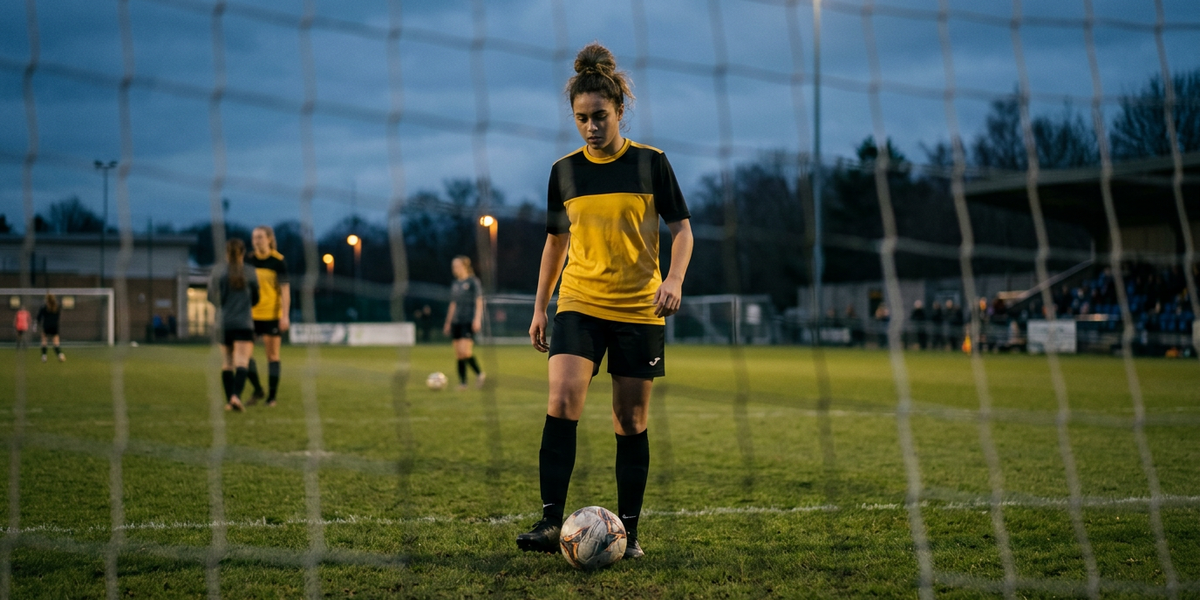
Understanding why you are getting less playing time this season
Learning how to deal with being benched in football is one of the hardest challenges a young player faces. It often feels like a personal rejection, but in most cases, it is a tactical decision or a reflection of current performance levels. To win back your spot, you must stop viewing the bench as a punishment and start seeing it as a temporary diagnostic phase. Professional clubs like those in the Premier League Academy system or MLS Next use squad rotation to manage load and test different tactical setups. Your first step is to objectively assess your recent performances and training intensity without letting emotion cloud your judgment.
There are several common reasons for a drop in playing time. You might be struggling with a specific tactical requirement, such as defensive transition or pressing triggers. Alternatively, a teammate might currently be in a peak run of form that fits the coach strategy better against specific opponents. By identifying the root cause, whether it is fitness, technical consistency, or tactical discipline, you can create a targeted plan to force your way back into the eleven. Successful players use this time to study the game from the sideline and identify gaps in the team that they are uniquely qualified to fill.
Key takeaways
Treat every training session as a high intensity trial to prove your readiness. Maintain professional body language on the bench to impress watching scouts. Schedule a calm and objective meeting with your coach to ask for specific feedback. Use solo drills and extra conditioning to ensure you are sharper than the starters. Update your career records and CV to stay prepared for future opportunities.
How to talk to your coach about playing time professionally
Communication is the most effective tool for any player seeking more minutes. However, the timing and tone of this conversation are vital. Never approach a coach immediately after a game when emotions are high or during a training session when they are focused on the group. Instead, request a five minute meeting before or after training on a Tuesday or Wednesday. This shows maturity and respect for their schedule. When you speak, avoid complaining about your lack of minutes or comparing yourself to other players. This only makes you seem like a difficult personality for the locker room.
Focus the conversation on your own development by asking specific questions. Use phrases like what specific areas of my game do I need to improve to earn a starting spot or are there tactical instructions I am not executing correctly. This approach forces the coach to provide a roadmap for your return. Listen carefully to their feedback even if it is hard to hear. If they tell you that your work rate off the ball is too low, do not argue. Take that information and make it your primary mission to improve that specific metric in every subsequent session. Most coaches value players who take feedback and apply it immediately.
Mental toughness and dealing with football rejection
Dealing with football rejection is a psychological battle that separates the elite from the average. It is easy to be a good teammate when you are starting every week, but your true character is revealed when you are out of the squad. A negative attitude not only hurts the team but also damages your reputation with scouts and recruiters. They look for players who are resilient and mentally stable under pressure. If you spend your time on the bench sulking or whispering to parents, you are actively proving the coach right for leaving you out.
Shift your mindset by setting small, achievable goals for each week. Instead of focusing on the Saturday lineup, focus on winning every 1v1 duel in Tuesday training or being the fastest in the Wednesday sprint drills. This builds a sense of control over your situation. Remember that even world class players like Phil Foden or Julian Alvarez have spent significant periods on the bench early in their careers. They used that time to sharpen their focus and wait for the one moment where they could make themselves un droppable. Your mental toughness is a skill that can be developed just like your passing or shooting.
Maintaining match fitness and game readiness on the sidelines
One of the biggest risks of being benched is losing your match sharpness. Training is rarely as intense as a full ninety minute match, meaning your conditioning can slip after just two or three weeks of limited action. To stay ready, you must supplement team training with individual work. This ensures that when the coach finally calls your name, you do not look sluggish or tired after ten minutes. Focus on high intensity interval training that mimics the stop and start nature of football. Short, explosive bursts are more useful than long, slow runs when you are trying to stay sharp.
During the game, stay mentally engaged with every play. Watch the player who is currently in your position. What are they doing well? Where are they struggling? If you are a winger and the opponent right back is constantly pushed high, you should be ready to exploit that space the moment you enter the pitch. Visualizing your impact before you step on the grass reduces the time it takes to adjust to the speed of the game. A prepared substitute is often the most dangerous player on the pitch because they have fresh legs and a clear plan of attack.
What scouts look for in substitute players and squad members
Scouts from professional academies and colleges are always watching, even when the ball is not near you. They pay close attention to how substitutes warm up and how they react when a teammate scores or makes a mistake. A scout wants to see a player who is a professional in every sense of the word. If you warm up with low intensity or look distracted, a scout will note a lack of discipline. Conversely, a player who warms up with intent and cheers on their team shows leadership qualities that are highly prized at the next level.
When you finally get on the pitch, even if it is only for ten minutes, scouts look for immediate impact. They want to see if you can follow tactical instructions under pressure. Do you track back? Do you communicate? Do you take risks in the final third? Impacting a game in a short window is a specific skill. You do not need to score a hat trick to impress. Often, a scout is more impressed by a substitute who makes three high quality tackles and keeps the ball simple to close out a game. Your behavior on the bench is a direct reflection of your readiness for a professional environment.
Specific drills to improve football skills at home during the week
When you are not getting enough minutes on the weekend, you must take ownership of your technical development. You can learn how to improve your football skills at home by focusing on high repetition drills that build muscle memory. Wall passing drills are excellent for improving your first touch and passing accuracy. Try to complete one hundred passes with each foot against a wall every day, focusing on the weight of the pass and the direction of your first touch. This ensures your technique remains crisp even when you are not playing full matches.
Dribbling through tight spaces is another essential area to work on. Set up a series of cones or even household objects just half a meter apart and navigate through them using all parts of your feet. Work on your weak foot as much as your dominant one to become a more versatile player. Coaches are much more likely to play a player who is comfortable in multiple positions or can use both feet effectively. These solo sessions build the confidence you need to take risks when you are eventually subbed into a game. Consistent home training shows the coach that you are dedicated to getting back into the team.
Knowing when to consider a transfer to a new club or school
While resilience is important, there are times when being benched is a sign that you are at the wrong club. If you have had professional conversations with your coach, applied all their feedback, and shown consistent excellence in training for several months without any change in playing time, it might be time to move. A player development depends on minutes played in competitive matches. If you are stuck behind a player who is clearly the coach favorite regardless of performance, staying may stunt your growth. This is especially true for players in the 16 to 21 age bracket where game time is crucial for recruitment.
Before making a move, evaluate the level of the competition. If you are at a Category 1 academy and not playing, moving to a Category 2 or a high level semi professional club might give you the minutes you need to progress. It is better to be a standout performer at a slightly lower level than a forgotten squad member at a top club. Use your football CV to document your history and strengths so that when you do look for a new team, you have a professional portfolio ready. A transfer should be a strategic step toward more playing time, not an emotional escape from a challenge.
Building a professional profile even during low playing time
Even when you are on the bench, you should be building your professional identity. Use this time to refine your football CV and ensure all your stats and physical metrics are up to date. You can learn how to make a football CV that highlights your strengths and previous achievements. Scouts look at your entire history, not just the last two weeks. If you have a solid CV that shows your consistency over several seasons, a short spell on the bench will be seen as a minor hurdle rather than a career ending event.
Focus on gathering footage for your highlights. Even if you only play twenty minutes, those minutes can contain high quality actions that show your potential. If you are unsure how to present your clips, look for highlight video tips to make sure you are showcasing the right attributes. Having a create a free profile on a platform like FootballersCV allows you to stay visible to the global scouting network. It ensures that while you are working hard to win back your spot at your current club, the rest of the football world still knows who you are and what you can do.
Final steps to reclaiming your spot in the starting eleven
Winning back your starting spot requires a combination of humility, hard work, and tactical intelligence. Start by being the first person at training and the last to leave. Show the coach through your actions that you are the most committed player in the squad. When you get your chance, whether it is for five minutes or a full half, play with high intensity and focus on doing the simple things perfectly. Often, coaches just need to know they can trust you to execute the game plan without making costly errors. Consistency is the fastest way to earn that trust back.
Keep track of your progress and maintain a positive relationship with your teammates. A player who supports others while fighting for their own spot is a leader that every coach wants in their starting eleven. By following these practical steps, you turn a period of frustration into a period of growth. Football is a long game, and being benched this season is just one chapter in your journey. Stay focused, stay fit, and stay ready for the moment the coach turns to the bench and calls your name. Your response to this challenge will define your career.