
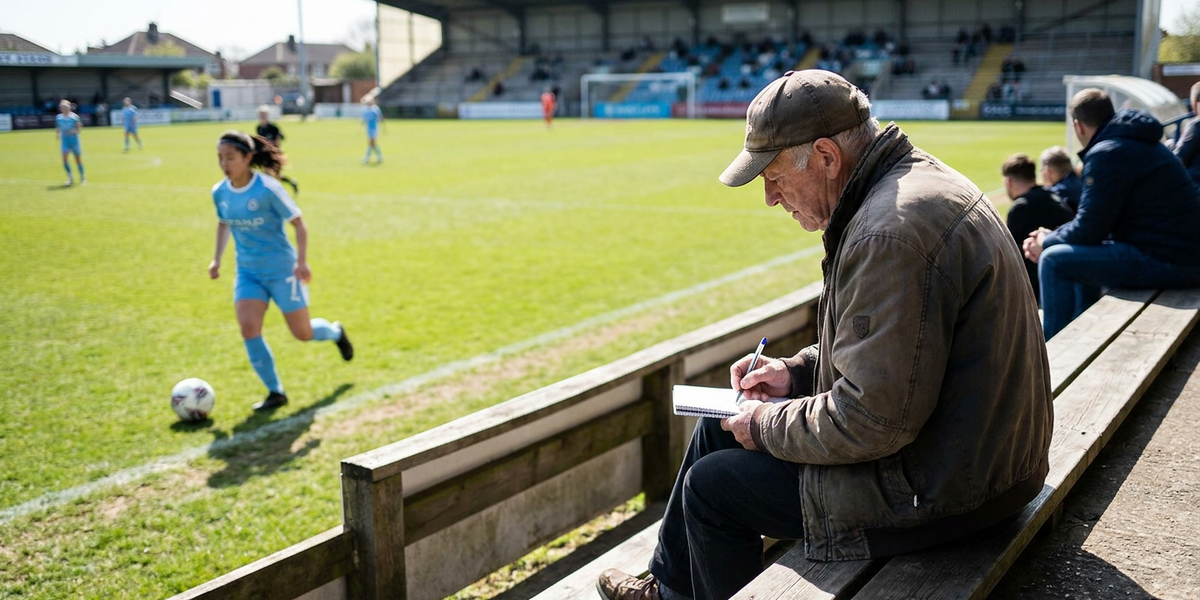
What attributes do scouts look for in fullbacks today
To get scouted as a fullback in the UK during the 2026 season, you must demonstrate elite high speed endurance and 1v1 defensive dominance. Scouts from Category 1 and Category 2 academies are no longer looking for traditional defenders who simply stay deep and kick the ball clear. They want to see players who can cover 10 to 12 kilometers per match, with a significant portion of that distance covered in high intensity sprints. Modern recruitment focuses on your ability to transition from a defensive block to an attacking threat in under five seconds.
Technical proficiency is the second major pillar for scouts. You must be comfortable receiving the ball under pressure from your goalkeeper and playing through a high press. Scouts look for left backs and right backs who can use both feet, as this allows for more versatile passing angles into the midfield. Accuracy in crossing is vital, but scouts also value your decision making regarding when to cross and when to retain possession. A fullback who can provide three to five high quality entries into the final third per game will quickly move to the top of a scouting report.
Key takeaways
High speed endurance and the ability to perform repeated sprints are the most important physical traits for modern fullbacks in the UK. Scouts prioritize 1v1 defensive capability and the tactical discipline to maintain the defensive line while supporting the attack. Technical versatility, including the ability to play with both feet and pass accurately under pressure, is essential for top tier academies. Using GPS data and professional video highlights is the most effective way to prove your physical and technical levels to club recruiters.
How fast do you need to be for a Premier League academy
Speed is a non negotiable requirement for fullbacks entering the Premier League academy system. At the Under 16 and Under 18 levels, scouts expect players to have a top speed at or above 32 kilometers per hour. For players aiming for the highest level, such as the Manchester City or Chelsea academies, these benchmarks can rise to 34 or 35 kilometers per hour. Speed is not just about the 100 meter sprint, it is about the first five yards. Explosiveness allows a fullback to recover when caught out of position or to beat a winger to a loose ball.
Beyond raw pace, scouts look for speed endurance. A player might be fast in the first half, but if their sprint speed drops by more than 10 percent in the final 20 minutes, they may be deemed unfit for the professional game. This is where GPS tracking becomes a powerful tool. If you can show a scout a report from a match where you maintained your top speed throughout the full 90 minutes, you provide concrete evidence that you can handle the physical demands of the English game. Proving your athletic ceiling is just as important as showing your skills on the ball.
What is the difference between a fullback and a wingback in academy football
Understanding the tactical distinction between a fullback and a wingback is crucial for your development. In a traditional back four, a fullback is primarily a defender who supports the attack during safe phases of play. Your main job is to maintain the width and protect the channels against opposition wingers. In this role, scouts look for your ability to coordinate with the center backs and ensure the defensive line remains compact. You are expected to be a specialist in 1v1 defending and aerial duels at the back post.
In contrast, a wingback usually operates in a back five or a three at the back system. This role demands significantly more offensive output. As a wingback, you are often the primary source of width for the team, and you are expected to spend a large portion of the game in the opposition half. Scouts will judge a wingback more heavily on their crossing, their ability to take on defenders in the final third, and their goal contributions. If you are versatile enough to play both roles effectively, you become a much more attractive prospect for clubs that shift between tactical systems.
How to get noticed by scouts while playing for a Sunday League team
Getting scouted from grassroots or Sunday League football in the UK requires a proactive strategy. You cannot simply wait for a scout to turn up at a local park. Scouts generally frequent high level youth leagues like the Junior Premier League or county level cup competitions. If you are playing for a local club, your first step should be to ensure you are competing in the highest division possible. Scouts want to see how you perform against the best attackers in your region, not how you dominate against weaker opposition.
To bridge the gap between Sunday League and the academy system, you must take control of your own recruitment. This involves creating a professional presence that scouts can find online. You should actively invite scouts to your most important matches by sending them a link to your player profile. When a scout sees a player who is organized and presents their stats clearly, they are more likely to take a trip to watch a game. Remember that scouts are looking for potential, so even if your team loses, your individual performance and attitude will be the focus of their assessment.
How do I record a recruitment video as a defender
A recruitment video for a fullback must be different from a striker highlight reel. Do not fill your video with goals or unnecessary step overs. Instead, focus on defensive transitions and tactical positioning. Scouts want to see your recovery runs where you sprint back to stop a counter attack. They want to see clips of you winning 1v1 battles against fast wingers. Use a wide angle lens or elevated camera position so that the scout can see your positioning relative to the rest of the defense.
Include a section dedicated to your distribution. Show your ability to switch the play with a long diagonal pass and your composure when passing out from the back. It is also helpful to include a brief segment of your physical data, such as your top speed or total distance covered during a match, overlaid on the screen. If you provide a clear and honest representation of your game, scouts will have the confidence to invite you for a trial. Making it easy for a recruiter to see your value is the fastest way to progress, and you can learn more about highlight video tips to improve your presentation.
Where are the best football trials in the UK this year
The landscape for open football trials in the UK is highly competitive, especially for defensive positions. The best opportunities are often found through exit trials organized by the League Football Education or through private academies that have direct links to professional clubs. Many Category 3 and Category 4 clubs in the EFL hold open trial days during the pre season months of June and July, as well as during the mid season window in January. These trials are excellent opportunities to showcase your fitness after a period of intense training.
You should also look into showcase matches hosted by reputable scouting organizations. These events often bring together recruiters from across the Premier League, Championship, and National League. When attending these trials, remember that you are being watched from the moment you arrive at the facility. Your punctuality, your interaction with other players, and your warm up routine are all part of the evaluation. Scouts are looking for professional characters who will fit into an academy environment without causing disruption. Proper preparation is essential to how to get a trial at a professional club.
The tactical evolution of the inverted fullback in 2026
Tactics in the UK have shifted significantly towards the use of inverted fullbacks, popularized by managers like Pep Guardiola and Mikel Arteta. In this role, a fullback moves into the midfield during the buildup phase to create a numerical advantage. If you want to get scouted by a top academy, you must show that you can play in the half spaces. This requires excellent peripheral vision and the ability to play short, sharp passes in congested areas of the pitch. Modern scouts look for defenders who have the technical brain of a central midfielder.
Training for this role involves improving your body orientation when receiving the ball. You must be able to scan the field and know your next pass before the ball arrives. During a match, show the scouts that you can recognize when to stay wide to provide an outlet and when to tuck inside to help your team control the middle of the park. This level of tactical intelligence is rare in young players and will make you stand out immediately. Demonstrating that you understand complex tactical instructions is a major green flag for academy coaches who want players they can mold into their specific systems.
Physical benchmarks and testing for modern defenders
Physicality remains a cornerstone of the English game. Beyond speed, scouts look for functional strength and aerial ability. As a fullback, you will often find yourself defending the back post against tall strikers or physical wingers. You must be able to hold your own in shoulder to shoulder challenges and win headers under pressure. Many academies now use specific tests like the vertical jump and the Yo Yo intermittent recovery test to gauge a player's raw athletic potential. Scoring highly in these tests can often compensate for slight technical deficiencies in the eyes of some recruiters.
Consistency in your physical output is what separates academy prospects from amateur players. If you are serious about getting scouted, you should be following a specific strength and conditioning program tailored for lateral movement and explosive power. Scouts will notice if you are agile enough to change direction quickly when a winger tries to dribble past you. The ability to stay low and move your feet rapidly is a technical defensive skill that is built on a foundation of physical fitness. Documenting your progress in these areas can give you a competitive edge when you build a football CV for club applications.
Building a professional profile to attract academy scouts
In the modern era of recruitment, your digital footprint acts as your first impression. Scouts use platforms to filter through thousands of potential players before they ever step foot on a sideline. A professional player profile should include your basic biographical information, your playing history, and your physical statistics. It is vital to keep this information updated every month. If you grow two inches or improve your sprint time, that information needs to be reflected on your profile immediately so scouts are seeing the most current version of you.
Transparency is key when communicating with clubs. Provide links to full match recordings rather than just edited highlights if requested, as this shows you have nothing to hide regarding your work rate or defensive positioning. By presenting yourself as a professional athlete who understands the business of football, you make it easier for scouts to take a chance on you. The goal is to reduce the risk for the club. When a scout has all the data, video, and references they need at their fingertips, the path to a trial becomes much smoother and more direct.