
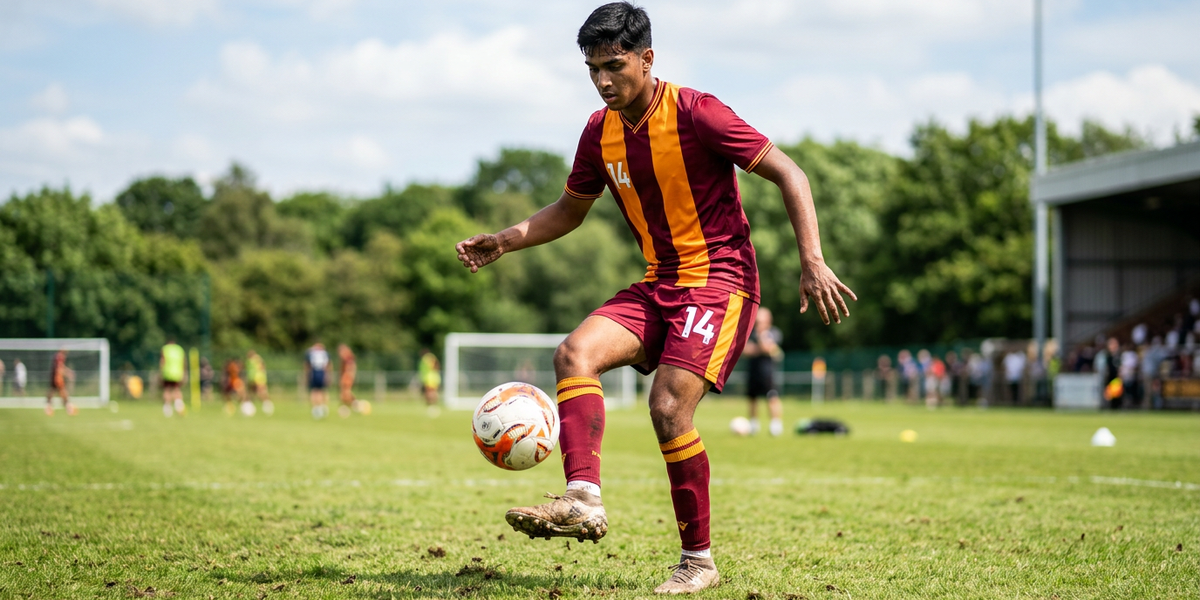
Understanding why concentration slips in the late stages
Modern football is faster than ever before. In 2026, the physical demands of a high press or a rapid transition style mean that your brain is processing thousands of data points every minute. Concentration is not just about paying attention. It is about the ability of your brain to filter out irrelevant noise while focusing on the movement of the ball, the position of your teammates, and the tactical shifts of your opponents. Many players experience a mental drop off around the 70 minute mark. This is rarely a lack of will. It is often the result of cognitive fatigue.
When you lose focus, you start making small technical errors. A heavy touch, a late tackle, or a failure to track a runners movement can change the outcome of a game in seconds. Professional clubs such as Manchester City or Real Madrid place a massive premium on players who possess a high level of psychological endurance. Scouts are not just looking at your skills. They are looking at whether you stay switched on during a boring period of the game or after you have made a mistake. Learning how to improve football concentration for 90 minutes is what separates the academy hopefuls from the professional regulars.
Key takeaways
Maintain focus by using specific mental triggers and reset cues during every dead ball situation this season. Use constant verbal communication to keep yourself and your teammates engaged in the tactical flow of the match. Improve your physical conditioning because a tired body leads to a tired brain and poor decision making under pressure. Practice active scanning every three to five seconds to ensure your brain is constantly processing relevant match data. Develop a consistent pre match routine that transitions your mindset from daily life into a high performance state.
The concept of mental stamina in elite football
Mental stamina is the psychological equivalent of physical fitness. Just as your legs can give out after repeated sprints, your brain can lose its sharpness after long periods of intense decision making. In the English Premier League or MLS, matches are often won or lost in the final ten minutes because one player allowed their mind to wander. Improving your concentration requires you to treat your brain like a muscle. You must train it to remain active even when you are not directly involved in the play.
A common mistake young players make is thinking they only need to focus when the ball is near them. This is a trap. The best defenders and midfielders are focused precisely when the ball is on the other side of the pitch. They are adjusting their positioning, checking their shoulders, and predicting the next two phases of play. This level of constant engagement prevents the mental dip that occurs when you allow yourself to relax. If you want to play at a high level, you must embrace the reality that your job requires total mental presence from the first whistle to the deep into stoppage time.
Practical reset triggers to use during dead ball situations
Football has natural pauses. Goal kicks, throw ins, and free kicks are moments where the intensity drops. While these are chances to catch your breath, they are also where most players lose their focus. To combat this, you should develop a reset trigger. This is a physical action that signals to your brain that it is time to refocus. Some players touch the grass, others snap a small rubber band on their wrist, and some simply clap their hands twice. This small ritual acts as a hard restart for your concentration.
Another effective technique is the use of verbal cues. Silently saying words like Next one or Back on to yourself can pull your mind away from a previous mistake and back to the present moment. If you just missed a sitter or gave away a penalty, you cannot afford to dwell on it. Scouts look for players who can move on from failure instantly. By using a physical reset trigger, you create a mental barrier between the past and the immediate future. This habit ensures that when the ball comes back into play, you are 100 percent ready to compete.
The role of communication in maintaining team focus
One of the simplest ways to stay focused is to talk. Communication is not just about helping your teammates. It is a powerful tool for self regulation. When you are constantly calling out instructions, such as Step up, Man on, or Watch the overlap, you are forcing your brain to stay connected to the tactical reality of the game. It is almost impossible to daydream while you are actively directing others. This is a key reason why captains and central defenders often seem to have the highest levels of concentration.
If you feel your mind starting to drift, start talking more. Even if the instructions seem obvious, the act of speaking keeps your neurological pathways firing in a way that is relevant to the match. This is especially helpful during the second half when physical fatigue starts to set in. By being the loudest player on the pitch, you create a feedback loop that keeps your intensity high. Scouts notice this immediately. A vocal player shows leadership, tactical understanding, and a high level of mental engagement throughout the full duration of the game.
Visual scanning as a tool for constant engagement
Scanning is the act of looking over your shoulder and away from the ball to gather information. While this is a technical skill, it is also a mental one. By setting a goal to scan every three to five seconds, you provide your brain with a constant stream of tasks. This prevents the mind from wandering into passive observation. In the midfield, legends like Xavi or Kevin De Bruyne are famous for their high scanning rates. They are never mentally stagnant because they are always looking for the next bit of information.
You can practice this in training by having a teammate hold up different colored cones or fingers behind you while you receive the ball. This forces you to engage with your surroundings. During a match, make it a game to count how many times you can scan in a minute. When you are actively looking for the position of the referee, the opposition fullbacks, and the space behind you, your concentration stays pinned to the game. This proactive approach to information gathering is a major part of how to improve football concentration for 90 minutes. Players who scan more are less likely to be caught out by a quick counter attack or a blind side run.
Pre match routines that set a mental foundation
Focus does not start at kickoff. It starts hours before the game. Developing a ritual allows you to enter the zone. This might include listening to a specific playlist, performing a set of mobilization exercises, or visualizing successful moments on the pitch. The goal is to create a predictable environment that tells your brain that it is time to work. If your pre match time is chaotic or distracted, your performance on the pitch will likely follow that same pattern. Try to arrive at the ground with a clear plan for your warm up and your mental state.
Visualization is a particularly strong tool. Spend ten minutes on the morning of the game closing your eyes and seeing yourself making perfect tackles, hitting accurate long balls, and communicating loudly with your team. By the time you step onto the pitch, your brain has already played the match several times. This reduces performance anxiety and makes staying focused much easier. If you are struggling with your mental approach, you can find more detail in our guide on how to make a football CV to see how mental attributes are ranked by professionals. Keeping your mind clear of external stress is vital for long term success.
Nutritional and physical factors affecting focus
Your brain requires a significant amount of energy to function at peak capacity. If your glucose levels drop in the second half, your concentration will be the first thing to go. Professional clubs in 2026 use precise fueling strategies to ensure players remain sharp. Consuming slow release carbohydrates three hours before the game and utilizing energy gels or isotonic drinks at halftime can provide the fuel your brain needs. Dehydration is another major enemy of focus. Even a one percent loss in body weight due to fluid loss can impair your cognitive function and decision making speed.
Furthermore, your physical fitness levels dictate your mental capacity. When you are gasping for air and your heart rate is at 190 beats per minute, your brain shifts its priority to survival rather than strategy. This is where high intensity interval training becomes crucial. By increasing your aerobic threshold, you can keep your heart rate in a zone where your brain can still think clearly. If you want to impress a scout, you need to show that you can make a smart, composed pass in the final minute of a tiring game. This is only possible if you have taken care of your nutrition and fitness foundations.
Training your brain with specific mental toughness drills
You can train your mind just like you train your finishing or your pace. One effective drill is the concentration grid, where you have to find numbers in sequence under a time limit while being distracted by noise. On the pitch, you can apply this by doing high intensity technical drills while a coach or teammate shouts distractions at you. The goal is to maintain flawless technique despite the outside interference. This simulates the pressure of a real match where thousands of fans or high stakes can pull your attention away from the task at hand.
Another drill is the late game scenario. During training, play a small sided game where the losing team has to complete a difficult technical task every time they concede. This raises the stakes and forces players to stay focused even when they are frustrated or tired. Building this mental resilience in training creates a reservoir of strength you can draw from during the 2026 season. If you want to take your career to the next level, you must be willing to work on your psychology as much as your ball control. These drills help you build the habits that scouts look for when they are evaluating your potential for professional football.
How to demonstrate high concentration to watching scouts
Scouts are trained to look for subtle signs of focus. They watch how you react when the ball goes out for a corner by another team. Do you immediately organize your teammates, or do you stand with your hands on your hips? They monitor how you respond to a bad decision by the referee. Do you argue and lose your cool, or do you get back into position immediately? These behaviors tell a scout everything they need to know about your mental toughness. High concentration is displayed through relentless movement and constant awareness, even when you do not have the ball.
When you are preparing your highlights, keep in mind that scouts also look for off the ball work. You can find useful highlight video tips to ensure you are capturing the moments that show your tactical maturity. A scout from a League One academy or an MLS Pro Next team wants to see a player who is disciplined for the full duration. Show them that you are the player who covers for a teammate out of position or who anticipates a turnover before it happens. This shows that your mind is always a few steps ahead of the play. By mastering your focus, you become a much more attractive prospect for higher level clubs.
The long term path to elite mental performance
Improving your concentration is a marathon, not a sprint. It takes months of deliberate practice to rewire your brain for constant focus. You should keep a post match journal to record the moments when you felt your concentration dip. Was it after you felt tired? Was it after a teammate yelled at you? By identifying your triggers, you can work on them in future games. Over time, your ability to stay locked in will become a natural part of your playing style, making you a more reliable and valuable player for any team you join this season.
Remember that every professional you see on TV has worked on this aspect of their game. Players like Declan Rice or Rodri are valued not just for their physical skills, but for their ability to remain tactically perfect for the entire 90 minutes. If you are serious about your development, you should also look into how to get a trial where you can put these mental skills to the test in front of professional recruiters. Your mental performance is a major part of your overall player profile. Treat it with the respect it deserves, and you will see the results on the pitch and in your career progression.
Create your professional football CV today
Mastering 90 minute concentration is a key trait that scouts value above almost everything else. Once you have built the mental habits to stay focused, you need a way to show clubs your progress and your achievements. At FootballersCV, we provide the tools you need to build a comprehensive digital profile that highlights your statistics, your playing style, and your professional ambitions. Join thousands of players globally who are using our platform to get noticed by clubs and academies in the UK, USA, and Europe. Create your free profile on FootballersCV right now and take the next step toward your professional football career.