
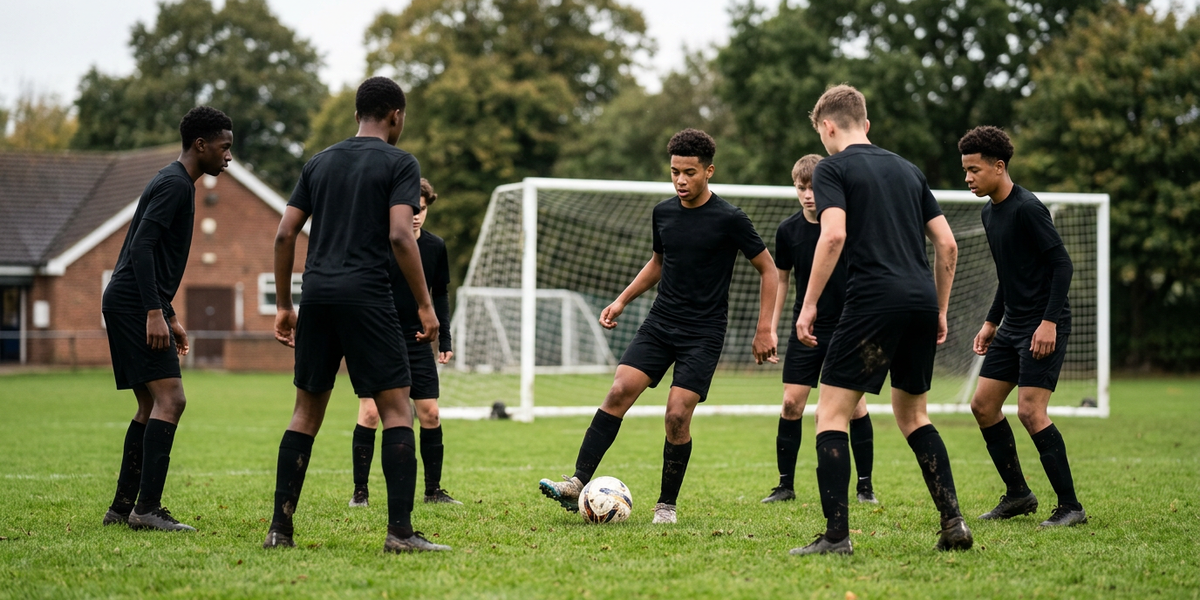
What is a ball playing goalkeeper?
A ball playing goalkeeper acts as the eleventh outfield player by initiating attacks and maintaining possession for their team. In the modern game, your role extends far beyond stopping shots. You are expected to be the first point of attack, using your feet to bypass the opposition press and create numerical advantages in the defensive third. Professional clubs like Manchester City or Arsenal, and top US college programs, now prioritize keepers who possess the technical ability of a central midfielder. This shift means you must be comfortable receiving the ball under pressure and delivering accurate passes over varying distances.
Being a ball playing goalkeeper requires a unique blend of technical skill and tactical awareness. It is not just about having a powerful kick. It is about understanding where the space is on the pitch and having the courage to execute a pass while an opponent is sprinting toward you. Scouts at the highest level look for players who can remain composed and make intelligent decisions that help their team transition from defense to offense quickly. If you want to reach the elite level this season, you must transition from a traditional shot stopper into a modern playmaker who controls the tempo of the game from the back.
Key takeaways
Modern goalkeepers must function as an extra outfield player to help teams bypass a high press during build up play. Technical mastery of both feet is non negotiable for players looking to join professional academies or high level college teams. Scanning the pitch before receiving the ball is the most important habit for maintaining composure under pressure. Scouts prioritize distribution accuracy and decision making alongside traditional shot stopping abilities in 2026. Consistent wall work and high intensity footwork drills are essential for developing the necessary touch and passing range.
How to improve goalkeeper passing accuracy for better distribution
Improving your passing accuracy starts with your technical foundation. You must treat your kicking sessions with the same intensity as a midfielder. A common mistake for young keepers is focusing only on power rather than the quality of the strike. To master short distribution, practice passing against a wall from ten yards, focusing on your weight of pass. The ball should reach your target quickly enough to avoid interception but softly enough for them to control it instantly. Use the inside of your foot for accuracy and ensure your standing foot is pointed directly at your target to maintain balance.
For long distance distribution, the side volley has become the gold standard in the modern game. This technique allows you to strike the ball with a flat trajectory, making it easier for your wingers or strikers to take it down under pressure. Focus on your body shape by leaning slightly to the side as you drop the ball. Strike through the center of the ball with your laces while keeping your toe pointed down. Practice hitting targets at forty and fifty yards until the movement becomes muscle memory. Accuracy at these distances is what separates average keepers from those who get scouted by top tier academies in the UK and Europe.
Best starting positions for build up play during matches
Your positioning during the build up phase determines how much time you have on the ball. If you stay glued to your goal line, you limit your passing angles and make it easier for the opposition to pin your team back. Instead, you should move to the edge of the six yard box or even the penalty spot when your center backs have the ball. By stepping up, you create a diamond shape with your defenders, which provides multiple passing lanes and forces the opposition strikers to cover more ground. This positioning allows you to act as a pivot point, shifting the ball from one side of the defense to the other.
You also need to adjust your position based on where the ball is on the pitch. If the play is on the right flank, you should shift toward that side to provide a safe back pass option. If your center back is being heavily pressed, you must be available as a relief valve. Good positioning is not static. It is a constant process of micro adjustments to ensure you are always an easy target for your teammates. By staying active and vocal, you help organize the back line and ensure that the team remains connected during the most dangerous phases of the game.
How to scan the pitch like a midfielder to find open teammates
Scanning is the secret weapon of elite ball playing goalkeepers. Most errors occur because a keeper receives the ball without knowing where the pressure is coming from. You must develop the habit of looking over both shoulders before the ball even reaches your feet. This allows you to build a mental map of the pitch. By knowing exactly where your fullbacks are and where the opposition strikers are lurking, you can make your decision before you even touch the ball. This reduces the time you spend in possession and decreases the chance of being caught in a dangerous area.
To practice this, you should perform scanning drills during every training session. As the ball is passed to you, look away from it for a split second to check your surroundings. In a game scenario, look for the free man. If the opposition is man marking your midfielders, the space is likely out wide with your fullbacks. If they are pressing high and wide, the space might be in the center for a direct ball to the holding midfielder. Constant scanning gives you the confidence to execute these passes because you are playing with your eyes open rather than reacting out of panic.
Tactical ways to handle high pressing forwards without panicking
High pressing forwards are designed to make you panic and force a turnover. The best way to beat a high press is to remain calm and use their momentum against them. When a striker sprints at you, they often leave a gap behind them. If you can stay composed, you can use a simple feint or a quick touch to one side to open up a new passing lane. Remember that the closer the striker gets to you, the more space there is elsewhere on the pitch. Your goal is to draw them in and then exploit the space they have vacated by finding a teammate who is now unmarked.
Communication with your defenders is also vital when facing a press. You need to tell your center backs where to move to create an exit route. If you are trapped, do not be afraid to play a long ball into the channels. Playing as a ball playing goalkeeper does not mean you must always play short. It means you must make the right decision. If the risk of losing the ball in your own box is too high, clearing the lines is a valid tactical choice. The key is to make that decision early rather than waiting until the last second when the pressure is overwhelming.
Essential goalkeeper drills for better footwork and ball control
Footwork is the foundation of all good distribution. You cannot be an effective playmaker if your feet are heavy or slow. Start every session with ladder drills or cone work designed to improve your agility and coordination. Focus on quick, small steps and staying on your toes. This allows you to adjust your body position rapidly when a pass is played slightly behind you or to your weak side. A goalkeeper with fast feet can turn a poor back pass into a productive attacking move by quickly repositioning themselves to strike the ball cleanly.
Another excellent drill is the two touch box challenge. Set up a small square and have a partner fire passes at you from various angles and speeds. You must control the ball with your first touch to set yourself up for a pass out of a different side of the square with your second touch. This mimics the reality of a match where you rarely have time for three or four touches. Incorporating these drills into your daily routine will build the technical consistency needed to perform under the bright lights of a trial or a high stakes league game. The goal is to make ball control feel as natural as catching a cross.
When to play short versus long passes for maximum impact
Understanding the rhythm of the game is essential for elite distribution. Short passes are excellent for maintaining control and tiring out the opposition. By playing short to your center backs or holding midfielder, you force the opponents to run and close gaps. This is particularly effective in the early stages of a match or when your team is trying to protect a lead. However, if the opposition is playing a very high defensive line, a well timed long pass can be devastating. A clipped ball over the top to a fast winger can bypass the entire midfield and create a one on one situation in seconds.
You must also consider the weather and pitch conditions. On a wet, fast surface, short passes along the ground are risky if the pitch is uneven. In these cases, a driven mid range pass to the chest of a teammate might be safer. Conversely, on a dry pitch, you can zip the ball across the grass with confidence. Always analyze the risk reward ratio. If a short pass has a high chance of being intercepted, look for a safer mid range option. The hallmark of a top ball playing keeper is the ability to vary their distribution to keep the opposition guessing while keeping their own team in possession.
Mental tips for staying calm on the ball under pressure
The mental aspect of being a ball playing goalkeeper is perhaps the hardest part to master. You will make mistakes. You might misplace a pass that leads to a goal or get tackled while trying to be too clever. The difference between a professional and an amateur is how they react to those moments. You must have a short memory. If you make an error, you cannot let it affect your next ten minutes. If you stop asking for the ball, you have let the opposition win. Stay brave and continue to play the way your coach has instructed, regardless of a single mistake.
Developing a pre pass routine can help manage anxiety. Before you receive the ball, take a deep breath and tell yourself to stay relaxed. Remind yourself that you have practiced these techniques thousands of times in training. Confidence comes from preparation. If you know you have the technical ability to execute the pass, the pressure of the match becomes much easier to handle. Parents should also play a role here by encouraging their children to take risks and not criticizing them when a distribution attempt goes wrong. This support system is crucial for young keepers developing their playmaking identity.
How to showcase your distribution skills to scouts and recruiters
When you are working on your recruitment process, your highlight reel must include more than just saves. Scouts want to see your range of passing and your composure under pressure. When you learn how to make a football CV, ensure you include specific stats if available, such as your passing completion percentage. Include clips of you initiating attacks, playing through a press, and successfully executing side volleys. These actions show that you are a modern goalkeeper who fits into a contemporary tactical system, which is exactly what professional academies are looking for in 2026.
During trials, make an effort to be the most vocal player on the pitch. Scouts are not just looking at your feet. They are looking at your leadership. If you are directing your defenders and demanding the ball in tight spaces, you demonstrate a level of confidence that is rare in young players. Make sure your video footage uses clear highlight video tips to draw attention to your positioning and scanning habits. By presenting yourself as a complete package, including shot stopping and elite distribution, you significantly increase your chances of being noticed by clubs in the UK, Europe, and the US college system.
Building a long term training plan for modern goalkeeping success
Becoming a top tier ball playing goalkeeper is a marathon, not a sprint. You need a structured training plan that balances goalkeeper specific drills with general technical work. Devote at least two sessions a week solely to your footwork and passing. Join in with the outfield players during their passing circles or possession games whenever possible. This will give you a better understanding of the angles and pressures that midfielders face, which in turn makes you a better distributor. The more time you spend with the ball at your feet, the more natural the role will become.
Finally, watch professional keepers who excel in this role. Study players like Ederson, Alisson Becker, or David Raya. Pay attention to their body language, their choice of pass, and how they react when things go wrong. Use their performances as a blueprint for your own development. By combining elite technical training with a deep tactical understanding of the game, you will position yourself as a highly valuable asset to any team. The path to becoming a professional goalkeeper now runs through your feet just as much as your hands, so embrace the challenge and start mastering your distribution today.
If you are ready to take the next step in your career, you should create a professional profile to document your progress. You can easily build a football CV that highlights your distribution stats and tactical intelligence. Having a centralized place for your videos and achievements makes it much easier for scouts to track your development over a season. Start putting in the work on the training ground and make sure the right people see the results of your dedication to the modern goalkeeper craft.
Showcase your skills to the world
Mastering the role of a ball playing goalkeeper takes time, but the rewards are massive in the modern market. Once you have developed these skills, you need a way to show them to the people who matter most in the professional game. Create your free profile at FootballersCV today to start building your professional identity and getting noticed by scouts and clubs globally.