
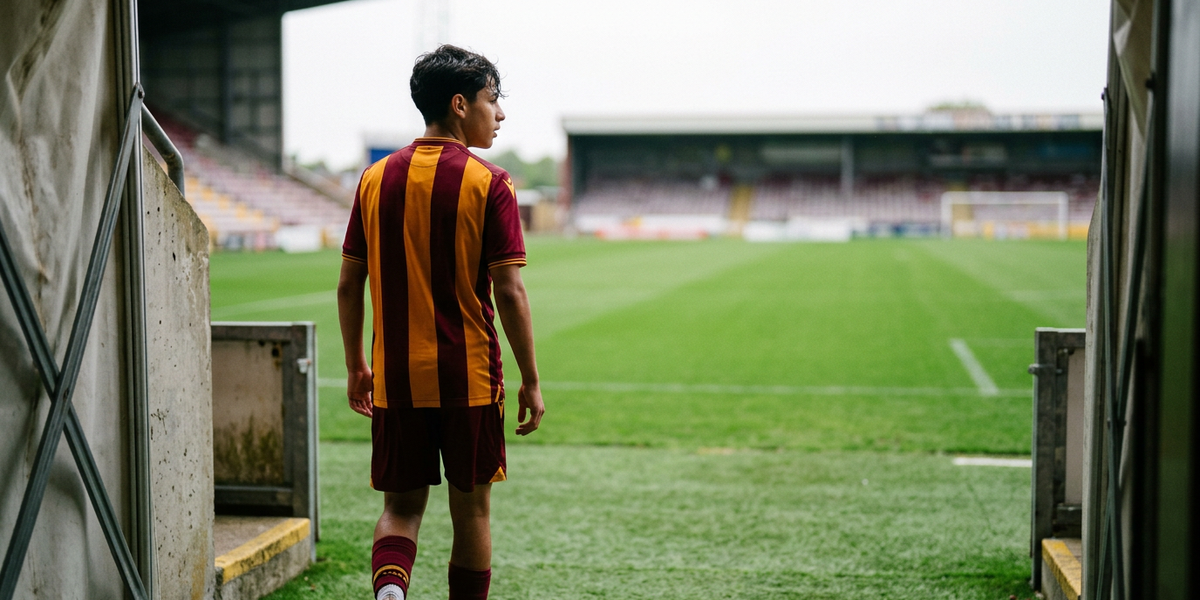
The Evolution of the Creative Number 10 Role
The classic number 10 role has undergone a massive transformation in the modern era. Historically, players like Juan Roman Riquelme or Zinedine Zidane were allowed to stay high up the pitch, waiting for the ball to arrive before sprinkling their magic. In 2026, the game is faster, more condensed, and physically demanding. Modern attacking midfielders like Martin Odegaard and Jamal Musiala must combine that old world creativity with extreme work rates and tactical discipline to survive in high pressure environments like the Premier League or the Bundesliga.
Playing as a number 10 is no longer just about the spectacular through ball. It is about understanding the geometry of the pitch and knowing when to drop deep to assist the build up or when to stay high to pin back the opposition center backs. Coaches at the elite academy level now look for players who can transition quickly. If you want to succeed as a playmaker today, you must be a multi dimensional threat who can dribble in tight spaces, win second balls, and execute tactical instructions without hesitation.
Key takeaways
Master the art of finding the pocket of space between the opposition midfield and defensive lines to receive the ball under less pressure. Prioritize constant scanning of the field to build a mental map of teammates and opponents before the ball even reaches your feet. Develop a diverse passing range including one touch lay offs, disguised reverse passes, and weighted balls behind the defense. Balance your creative freedom with defensive responsibilities by pressing the opposition 6 and closing passing lanes during transitions. Use late runs into the box to provide a secondary goal scoring threat and capitalize on the space created by your striker.
Mastering Positioning Between the Lines
The most critical skill in the arsenal of a creative number 10 is the ability to find space between the lines. This area represents the gap between the opponent midfielders and their defenders. In a standard 4 4 2 or 4 1 4 1 block, this space is where the playmaker can do the most damage. However, standing still in this zone makes you an easy target for a holding midfielder. You must use subtle lateral movements to stay in the blind spots of the opposition 6. By positioning yourself slightly to the left or right of their central defensive midfielder, you force them to turn their head, creating a moment of hesitation you can exploit.
Effective positioning also requires understanding the concept of verticality. When your center backs have the ball, you might need to drop into a deeper pocket to pull a defender out of position. If the defender follows you, a huge space opens up behind them for a winger or striker to run into. If they do not follow you, you receive the ball with time to turn and face the goal. This constant chess match is what separates average players from elite playmakers. You are not just looking for space for yourself, you are manipulating the entire defensive structure to create gaps for the whole team.
The Importance of Constant Scanning and Vision
To play as a creative number 10, you must see the game in slow motion while everyone else is playing at full speed. This is achieved through scanning. Studies of elite players like Kevin De Bruyne show they scan the pitch up to six or eight times in the ten seconds before receiving the ball. This is not just looking at the ball, it is looking over both shoulders to see where the nearest defender is, where the gap in the defensive line is, and which teammate is making a run. Without this mental map, your first touch will likely take you into trouble rather than into space.
Vision is often misunderstood as a natural gift, but it is actually a trained habit. When you train this season, focus on checking your shoulders every time the ball moves from one teammate to another. This ensures that when the pass finally comes to you, you already know whether you have time to turn or if you need to play a one touch pass back to a teammate. Real world scouts from La Liga and MLS academies look for this specific behavior during trials. They want to see a player who is already thinking two steps ahead before the ball has even touched their boots.
Technical Foundations for the Modern Playmaker Technical Mastery
Technical skill is the baseline requirement for any number 10. Your first touch must be impeccable, particularly when receiving the ball on the half turn. Receiving on the half turn means your body is angled so you can see both the ball and the attacking goal simultaneously. If your first touch is too heavy or if you trap the ball dead under your feet, the opposition will swarm you instantly. You should practice receiving the ball with your back foot to allow your first touch to carry you away from the defender and into the forward space.
Passing accuracy over short and medium distances is your primary tool. You should be comfortable using all parts of your foot, including the outside of the boot for disguised passes and the instep for driven balls. Training drills should emphasize passing under pressure in tight 4v4 or 5v5 small sided games. In these environments, the windows for passing are tiny, which forces you to sharpen your execution. Remember that as a number 10, you are the quarterback of the team. Your passes set the tempo and dictate the direction of every attack.
Creation Dynamics and Playing the Killer Pass
The hallmark of a great creative number 10 is the killer pass, the ball that eliminates three or four defenders and puts a teammate through on goal. To master this, you must learn to recognize trigger movements from your strikers. If a striker makes a diagonal run across a center back, that is your cue to slide the ball into the path of their run. You should also develop the ability to play reverse passes, which involve looking one way while passing the other. This deception freezes the goalkeeper and defenders, giving your teammate a crucial extra second.
However, being creative also means knowing when not to play the risky pass. Sometimes, the best play for a number 10 is to keep possession with a safe sideways ball to a fullback, waiting for the opposition to lose their defensive shape. Overplaying and losing the ball in the middle of the pitch is a cardinal sin because it leaves your team vulnerable to a counter attack. Balance your ambition with game intelligence. High level football positioning for number 10s involves recognizing when to be the protagonist and when to be the facilitator.
The Art of the Late Run into the Penalty Area
Scoring goals is just as important as creating them for a modern attacking midfielder. While the striker is busy wrestling with the center backs, the number 10 often has the freedom to arrive late and unmarked in the penalty area. This is a skill mastered by players like Frank Lampard and Bruno Fernandes. By timing your run so you enter the box just as the cross or cut back is delivered, you become nearly impossible to track. Defenders are usually fixated on the ball and the primary striker, leaving the edge of the area or the penalty spot wide open for a late arrival.
You must track the trajectory of the ball on the wings. If your winger is driving toward the byline, do not sprint into the box too early. If you enter too soon, you will find yourself marked by a center back. Instead, linger at the edge of the area and accelerate into the space only when the winger is ready to deliver. This secondary threat from midfield adds a massive layer of complexity for the opposing coach to handle. Consistent goal contributions from the midfield are what earn players professional contracts and high value transfers.
Defensive Responsibilities of the Modern Number 10
It is a myth that as a creative number 10 you can neglect your defensive duties. In tactical systems like the high press used by teams such as Liverpool or Manchester City, the number 10 is often the leader of the first line of defense. Your job is usually to shadow the opposition holding midfielder, preventing them from receiving the ball from their center backs. By cutting off this supply line, you force the opponent to play long balls or go wide, where your team can more easily win the ball back.
When your team loses possession, you must immediately switch into a defensive mindset. This is known as the counter press. If you are close to the ball, you pressure the player who just won it to force a mistake. If you are further away, you must quickly drop back into the team shape to help clog the midfield. Coaches look for players with high tactical stamina who do not switch off when the ball is lost. Showing this level of commitment is vital when you are learning how to make a football CV that highlights your well rounded game.
Physical Conditioning for Elite Attacking Midfielders
While the number 10 might not run as many straight line sprints as a winger, the physical demands of the position are intense. You need high levels of agility and explosive power to turn away from markers in tight spaces. Short, sharp movements are your bread and butter. Your conditioning program should include plyometric exercises like box jumps and lateral bounds to build that explosive first step. Balance and core strength are also non negotiable, as you will often have to hold off strong defenders while trying to maintain control of the ball.
In terms of endurance, a number 10 needs the capacity to perform repeated high intensity efforts. You are constantly moving, adjusting your position by a few meters here and there to stay in space. This requires a strong aerobic base but also the ability to recover quickly from bursts of activity. Focus on interval training that mimics the ebb and flow of a match. Being fit enough to maintain your technical quality in the 89th minute is what separates the world class playmakers from the rest of the pack.
Mental Resilience and Decision Making Under Pressure
The position of a number 10 carries a lot of responsibility and pressure. You are expected to be the main source of creativity, which means you will sometimes try passes that do not come off. Mental resilience is crucial. If you miss a pass or lose the ball, you cannot let your head drop. You must have the confidence to ask for the ball again immediately. Great playmakers have a short memory for failure and an unwavering belief in their technical ability. This mental toughness is a trait that scouts look for when they observe how a player reacts to mistakes during a game.
Decision making is the ultimate expression of football intelligence. It is the ability to choose the right action at the right time. Should you shoot from distance, slip a ball through the defense, or switch the play? This comes from experience but also from studying the game. Watching professional matches and focusing specifically on the movement of the number 10 can provide a wealth of knowledge. Analyze why they made a specific choice and try to replicate that thought process in your own matches. High quality highlight video tips often suggest showing your decision making process, not just the successful outcomes.
How to Showcase Your Playmaking Skills to Scouts
In today's global market, getting scouted as a number 10 requires more than just talent, it requires visibility. You need to document your performances meticulously. Statistics are becoming increasingly important in modern scouting. While goals and assists are the headline numbers, scouts also look at metrics like key passes, progressive carries, and successful passes into the final third. Keep a record of these statistics from your club games to add weight to your professional profile. Physical data from GPS trackers can also prove your work rate to skeptical coaches.
Video footage is your most powerful tool for reaching clubs outside your local area. A well edited highlight reel should showcase your range of skills, including your vision, passing, and ability to find space. Don't just show the goals, show the moments where you orchestrated an attack or tracked back to win the ball. Having a professional digital presence allows scouts from the UK, Europe, and the US to find you at any time. This accessibility is essential for players who might not live in major footballing hubs but have the talent to compete at the highest level.
Take the Next Step in Your Football Career
Mastering the creative number 10 role takes time, dedication, and a lot of practice on the training ground. By applying these tactical tips and focusing on your technical development, you can become the playmaker that every coach wants in their starting lineup. But remember, being a great player is only half the battle. You also need to ensure the right people are seeing your progress. In the modern game, your digital footprint is just as important as your performance on the pitch.
Do not leave your future to chance by waiting for a scout to happen to show up at your Sunday league game. Take control of your career right now. Start building a professional profile that highlights your statistics, your highlight videos, and your technical attributes. Whether you are aiming for a professional academy in England, a college scholarship in the USA, or a trial with an MLS club, having a centralized place for scouts to find you is the most effective way to advance.