
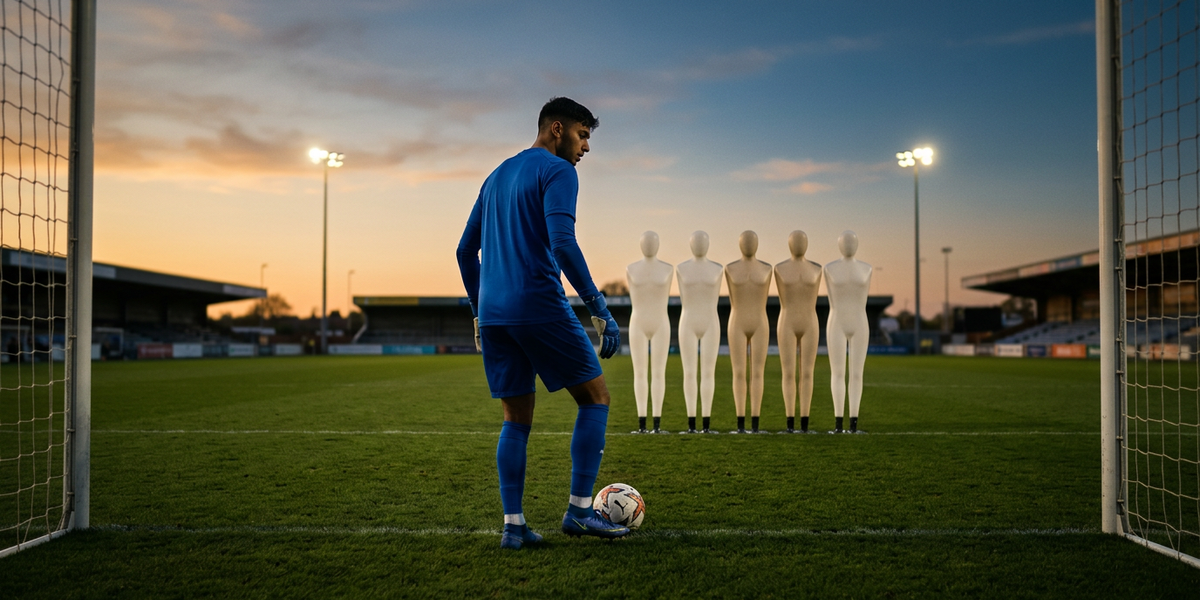
The Evolution of the Modern Goalkeeper
The days of a goalkeeper simply standing on the white line and stopping shots are over. In the current era of football dominated by high pressing and possession based tactics, the goalkeeper has evolved into the eleventh outfield player. This shift has given rise to the sweeper keeper, a role popularized by icons like Manuel Neuer and refined by modern masters like Ederson and Alisson Becker. For any young goalkeeper looking to progress into a professional academy or a high level US college program this season, mastering this role is no longer optional. It is a fundamental requirement.
Being a sweeper keeper means you take responsibility for the space between yourself and your defensive line. When your team plays with a high line to squeeze the opposition, a massive gap is left behind the center backs. Your job is to occupy that space, acting as a safety net that cleans up through balls and over the top passes before the striker can reach them. This requires a unique blend of tactical intelligence, bravery, and technical proficiency with the ball at your feet. Scouts now look for keepers who can initiate attacks as much as they look for those who can save them.
Transitioning into this style of play can be daunting for players used to traditional coaching. It requires you to be comfortable far from your goal, sometimes even thirty yards out when your team is in the final third. It also demands a high level of football IQ to recognize when to charge out and when to hold position. This guide will break down the specific technical and tactical steps you need to take to master the modern goalkeeper role and get noticed by professional clubs.
Key takeaways
Maintain a proactive starting position relative to the ball to minimize the space for attackers to exploit behind your defense. Develop a diverse passing range including short vertical passes and long diagonal balls to bypass the opposition press. Improve your mental anticipation by studying the body language of opposition midfielders before they play a long ball. Use loud and clear communication to guide your defenders and ensure the high line remains compact throughout the match. Risk management is vital, only leave your penalty area when you are certain you will impact the play or win the ball first.
Mastering Proactive Starting Positions
Positioning is the foundation of the sweeper keeper role. If you stay rooted to your six yard box while your defense is at the halfway line, the gap is too large to defend. You must move like a shadow of the ball. When your team is attacking in the opponent half, your starting position should be near the edge of the eighteen yard box or even a few yards outside it. This allows you to reach any ball played over the top much faster than if you were standing on your goal line. It effectively shrinks the pitch for the opposition.
As the ball moves closer to your goal, you must adjust your depth. If the ball is in the middle third, you might drop back to the penalty spot. The goal is to always be at a distance where you can sprint and reach a through ball before the fastest attacker, while still being able to retreat quickly if you see a direct shot or a lob being attempted. This constant movement requires intense focus and physical readiness. You cannot afford to switch off for a second because a single misplaced step can result in an easy goal for the opponent.
One of the best goalkeeper positioning drills 2026 coaches recommend is the rubber band drill. Imagine a rubber band connecting you to your center backs. If they move up, you are pulled up with them. If they drop back, you drop back. By maintaining this consistent distance, you ensure that the space behind the defense is always covered. You are not just a shot stopper, you are a sweeper who cleans up the danger before it ever results in a shot on goal. This proactive stance is what separates elite modern keepers from the rest.
Reading the Game and Anticipating Danger
Anticipation is a mental skill that distinguishes the best sweeper keepers. You must learn to read the cues from the opposition. Instead of watching the ball, watch the player on the ball. Look at their body shape, their first touch, and their eyes. If a midfielder drops their shoulder and looks for a run from an attacker, they are likely preparing a long ball over the top. By recognizing this a split second early, you can start your sprint toward the edge of the box before the ball is even kicked.
This proactive approach requires you to understand the tactical setup of the opponent. Are they playing with a fast striker who thrives on playing off the shoulder of the last defender? If so, your role as a sweeper becomes even more critical. You must be prepared to leave your box and use your feet, head, or chest to intercept passes. Remember that outside the penalty area, you cannot use your hands, so your technical ability to control the ball under pressure is under the microscope. Practice controlling high balls with your chest and passing them out immediately to a teammate.
Knowing when not to come out is just as important as knowing when to charge. If a through ball is moving too fast and will likely bounce into your hands, there is no need to rush out and risk a foul or a red card. If the attacker is already in full control of the ball and has slowed down, rushing out makes it easy for them to dribble around you. In those situations, you should hold your ground, shorten your steps, and get into a set position to deal with a one on one. This decision making process is what scouts evaluate when looking for a modern goalkeeper.
Developing Elite Distribution and Passing Range
Modern goalkeeper distribution tips always emphasize that you are the first point of attack. Once you have claimed the ball or intercepted a pass, your next action dictates the speed of the transition. A sweeper keeper must have the passing range of a deep lying playmaker. You should be comfortable playing short, crisp passes to your center backs under pressure, as well as fizzing long balls to the wingers or a target man. Distribution is about more than just accuracy, it is about weight and timing.
In modern builds, the keeper often splits the center backs and becomes a third man in the buildup. If the opposition presses high with two strikers, you create a three versus two advantage. You must stay calm when an attacker is sprinting toward you. Use your first touch to set the ball out of your feet and look for the open man. If you can break a line of pressure with a single pass into a midfielder, you have given your team a massive tactical advantage. This is a skill that requires thousands of repetitions on the training ground.
To truly excel, work on your weak foot as much as your strong foot. Many teams will try to press a goalkeeper onto their weaker side to force a mistake. If you can comfortably clip a ball out to your left back with your left foot, you become impossible to trap. High level academy scouts want to see that you can contribute to the rhythm of the game. When you learn <a>how to make a football CV</a>, highlighting your passing percentage and distribution success is a great way to showcase this modern skillset to potential clubs.
The Mental Toughness of a Sweeper Keeper
Playing as a sweeper keeper is a high risk and high reward strategy. Because you are playing so high up the pitch, any mistake you make is usually catastrophic. You might misjudge a bounce and get lobbed, or you might mistime a tackle outside the box and receive a red card. This role requires a thick skin and extreme mental resilience. You cannot afford to dwell on a mistake for the rest of the game. You must have the confidence to keep playing high and keep asking for the ball even after an error.
Bravery is another key component. You will often find yourself in fifty fifty situations with a sprinting striker. You must be willing to put your body on the line to win the ball while remaining controlled enough not to commit a foul. This mental composure is what allows keepers like Marc Andre ter Stegen to play out from the back in the most intense Champions League matches. They trust their technique and their preparation. You must develop that same level of self belief through rigorous training and game experience.
Focusing on the present moment is essential. A goalkeeper might have nothing to do for eighty minutes and then be required to make a thirty yard sprint to intercept a ball in the eighty first minute. Keeping your mind sharp while your body is relatively still is a skill in itself. Stay engaged by talking to your defenders, adjusting your position every time the ball moves, and constantly scanning the pitch for potential threats. Mental fatigue often leads to poor decision making, so staying sharp for ninety minutes is a priority for any aspiring pro.
Communication and Organizing the High Defensive Line
You are the only player on the pitch who can see the entire game unfolding in front of you. As a sweeper keeper, your voice is your most powerful tool. You are responsible for keeping your defensive line organized. If you see your center backs dropping too deep and creating a gap in the midfield, you must shout for them to step up. Conversely, if you see an opponent making a blind side run, you must alert your defenders immediately. Your communication should be loud, concise, and instructive.
Effective communication prevents the need for sweeping actions in the first place. If you can guide your defenders to cut off the passing lanes, the through ball will never be played. Use specific names and directions. Instead of just shouting Watch out, try shouting John, check your shoulder or Step up two yards. This helps your teammates make instant adjustments without having to turn around and look at you. Building a relationship of trust with your back four is essential. They need to know that if they stay high, you will be there to cover the space behind them.
During set pieces and defensive transitions, you are the conductor. Efficiently organizing the wall, marking assignments, and defensive shape will make your job much easier. A quiet goalkeeper is a vulnerable goalkeeper. Even if you are naturally introverted, you must develop an on field persona that is commanding and authoritative. This leadership quality is highly valued by coaches and is often a deciding factor when a club chooses between two equally talented keepers. Practice your vocal commands during training so they become second nature during a match.
Technical Training Drills for Sweeper Keepers
To improve your execution, you need specific drills that simulate match scenarios. One effective drill for sweeper keepers involves a coach or teammate playing long balls from the center circle into the final third. You must start on your six yard line, read the flight of the ball, and sprint out to clear it before a charging attacker reaches it. Focus on your decision making. Should you head it, kick it first time, or control and pass? Varying the speed and height of the balls will challenge your perception and timing.
Another vital drill focuses on distribution under pressure. Set up a small grid where you receive a backpass from a defender while an attacker is actively pressing you. You must have three options to pass to, located at various distances. The goal is to receive, scan, and execute a pass into a target area within two touches. This builds the composure needed to play out from the back in high stakes games. Repeat this until you can play the pass accurately every time, even when the pressure is intense. Use these sessions to record clips for your <a>highlight video tips</a> to show scouts your comfort on the ball.
Finally, work on your footwork and recovery speed. Set up a drill where you have to make a save at the near post, then immediately sprint to the edge of the area to clear a follow up through ball. This simulates the rapid transition from a shot stopping role to a sweeping role. It also builds the explosive leg power required for the modern game. Incorporating agility ladders and short distance sprints into your daily routine will ensure that you have the physical tools to match your tactical understanding. training should be high intensity and mimic the chaotic nature of a real match.
Physical Attributes and Athleticism Requirements
The sweeper keeper must be an exceptional athlete. While height is still an advantage for reaching crosses and making saves, mobility is now equally important. You need explosive acceleration to win those short races against strikers. This means your training should include plyometrics and sprint work. You are often required to cover ten to fifteen yards in a heartbeat. Improving your reaction time and your ability to change direction quickly will allow you to reach balls that other keepers would simply watch go by.
Stamina is also a factor. While goalkeepers cover less total distance than outfield players, the physical demand on a sweeper keeper is higher than a traditional one. The constant micro adjustments in positioning and the repeated high intensity sprints out of the box add up. You must maintain your physical sharpness until the final whistle, as many goals are conceded in the last ten minutes due to fatigue and a subsequent drop in concentration. Core strength is another priority, as it helps you maintain balance when kicking or when colliding with opponents in the air.
Flexibility and range of motion are crucial for both injury prevention and performance. A sweeper keeper often has to make unorthodox clearances or broad saves. Incorporating a dedicated stretching or yoga routine can help you stay limber and reduce the risk of muscle strains during explosive movements. Remember that your body is your tool, and staying in peak physical condition is necessary to execute the demanding requirements of this specialized role. Scouts at the highest level of the game expect goalkeepers to look and move like elite athletes.
Analyzing Professional Examples and Game Tape
One of the fastest ways to learn how to play as a sweeper keeper is to watch the best in the world. Spend time analyzing full match footage of Manuel Neuer during his prime at Bayern Munich or Ederson at Manchester City. Don't just watch the saves. Use a wide angle view if possible and watch their positioning when the ball is at the other end of the pitch. Note how far they come out of their box and how they interact with their defenders. This visual learning will help you internalize the movements required for the role.
Pay close attention to their decision making in one on one situations. Notice how they rarely dive in early. They stay big, keep their feet moving, and wait for the attacker to make a mistake. Also, observe their distribution. Watch the trajectory of their passes and how they use different parts of their feet to achieve different effects. Analysis is a powerful tool for improvement. You can even record your own games and compare your positioning to that of a professional. This self reflection will highlight areas where you might be dropping too deep or failing to provide an outlet for your teammates.
Finally, understand that every team's system is different. Some coaches want their sweeper keeper to be extremely aggressive, while others prefer a more conservative approach. Learn to be adaptable. If you are trailing in a game and your team is pushing for a goal, you might need to take even more risks to help maintain the pressure. If you are defending a lead, your priority might shift back toward traditional shot stopping and time management. Being a complete goalkeeper means having the tactical intelligence to adjust your style of play based on the match situation and your coach's instructions.
Join the FootballersCV Platform
Mastering the sweeper keeper role is a journey that requires dedication, training, and exposure. Once you have developed these skills, you need a way to showcase them to the football world. At FootballersCV, we provide the platform for young players to build professional profiles that get noticed by scouts from the UK, USA, Europe, and beyond. Whether you are aiming for a Category 1 academy or a top tier US college scholarship, having a verified CV is your first step toward a professional career.
Our tools help you organize your stats, highlight your best match footage, and connect with the right people in the industry. The modern game is more competitive than ever, and you need every advantage you can get. Don't let your talent go unnoticed because you lack a professional presentation. Join thousands of other ambitious players who are taking control of their footballing futures. Create your profile today and start your journey toward becoming an elite sweeper keeper in 2026.