
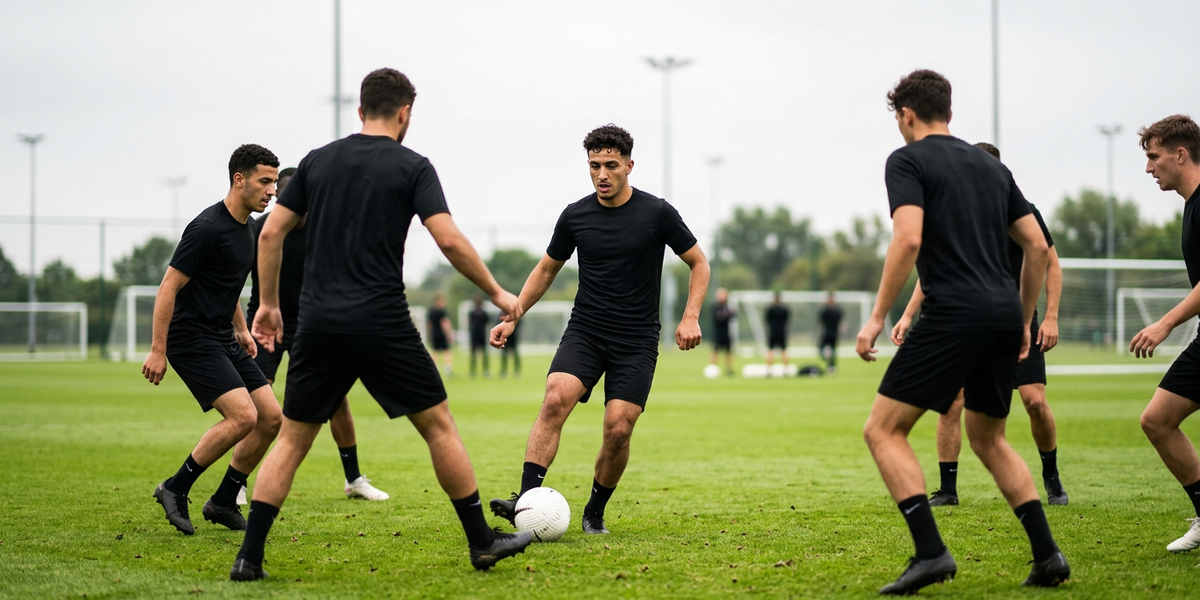
Understanding the Modern Inverted Winger Role
The traditional winger role has undergone a massive transformation over the last decade. In the past, a manager would place a right footed player on the right wing with the primary objective of beating a full back and delivering a cross. In the modern game, elite coaches like Pep Guardiola and Jürgen Klopp have popularized the inverted winger. This involves placing a player on the opposite side of their natural foot, such as a left footed player on the right wing. This shift allows the player to move toward the goal rather than away from it, turning a wide attacker into a secondary striker.
To understand how to play as an inverted winger, you must first recognize the tactical advantage this provides. When you are positioned on the opposite flank, your body is naturally open to the rest of the pitch. This allows you to see the entire field of play, including the movements of your strikers and central midfielders. It changes your diagonal passing lanes and makes you a direct threat to the goal every time you receive the ball. Unlike a traditional winger who is limited by the touchline, the inverted winger operates in a three dimensional space that causes chaos for the opposing defensive line.
For young players in academies today, mastering this role is essential if you want to reach the professional level in 2026. Most top tier systems, from Category One academies in the UK to high level MLS Next programs in the USA, utilize a front three where the wide players are expected to be prolific goalscorers. You are no longer just a provider; you are a finisher. This guide will provide the specific technical and tactical steps needed to thrive in this specialized position and catch the eye of scouts searching for modern attacking talent.
Key takeaways
Inverted wingers must use their positioning to open up diagonal passing and shooting lanes by playing on the opposite side of their dominant foot. Mastering the half space between the opponent full back and center back is the primary goal for creating goal scoring opportunities. Effective communication and timing with an overlapping full back are crucial to distract defenders and create space to cut inside. High levels of ball control at speed and a clinical finishing ability with the stronger foot are the core technical requirements for the role. Defensive discipline is vital, requiring the player to tuck inside during the defensive phase to maintain a compact midfield block.
Mastering the Half Space and Positioning
One of the most important concepts for an inverted winger is the mastery of the half space. In tactical terms, the pitch is divided into five vertical lanes: two touchline zones, two half spaces, and the central corridor. While a traditional winger stays in the touchline zone, the inverted winger lives in the half space. This is the area between the opponent wing back and their center back. By positioning yourself here, you create a dilemma for the defense. If the full back follows you, they leave the wing open for your overlapping defender. If the center back steps out, they leave a gap in the heart of the defense.
Your starting position should still be wide to stretch the game, but your intention should always be to move into that half space as the ball moves into the attacking third. You want to receive the ball on your back foot with your chest facing the goal. This gives you the split second advantage needed to make a decision before a defender can close the gap. Successful players like Bukayo Saka or Mohamed Salah are masters at finding these pockets of space where they are neither fully marked by a midfielder nor a defender.
To improve your positioning this season, watch your matches back and analyze where you receive the ball. Are you too flat against the touchline? Are you standing still? A great inverted winger is constantly on the move, drifting between the lines to stay invisible to defenders. Your goal is to be a ghost in the defensive structure, appearing in gaps just as the ball arrives. This requires high level scanning and an understanding of where your teammates are at all times.
The Art of the Cut Inside Technical Breakdown
The signature move of the inverted winger is the cut inside. This is not just a simple turn; it is an explosive change of direction designed to leave a defender off balance. To execute this perfectly, you must first sell the threat of going down the outside. Use your body language and a heavy touch toward the corner flag to force the defender to look at the touchline. Once their weight shifts, use the inside of your dominant foot to chop the ball back into the central area. This creates the angle you need to either shoot or play a through ball.
Technical precision is non negotiable here. Your first touch must be perfect to set up the move. If the ball is too close to your body, you will lack the power to explode past the defender. If it is too far away, the covering central midfielder will intercept it. Practice taking your setup touch at a forty five degree angle toward the goal. This forces the defender to retreat and gives you the space to look up and assess your options. Remember that the best players do not just cut inside every time; they keep the defender guessing by occasionally taking the ball to the byline with their weaker foot.
Speed of execution is what separates academy prospects from professional players. In a match situation, you might only have a one meter window to release a shot or a pass. You should spend time in training working on your footwork in tight spaces. Use cones to simulate a defender and practice the transition from a wide dribble to a central strike. If you can master this transition, you will become a nightmare for any full back to mark because they never know which way you will turn.
Creating Overloads With Overlapping Full Backs
The success of an inverted winger often depends on the relationship with their full back. Because you are naturally inclined to move inside, you leave the wide channel vacant. An offensive minded full back should fill this space, creating a two against one situation against the opposing defender. When you have the ball and your full back overlaps, the defender is forced to make a choice. If they stay with you, you pass to the overlapping runner. If they move to cover the run, you have a clear path to drive into the box and score.
Communication is the key to making this work. You do not always need to shout; a simple trigger such as you stopping the ball or taking a slow touch inside can signal to your full back that it is time to sprint past you. This relationship is a fundamental part of modern tactics used by teams like Manchester City and Arsenal. By drawing defenders out of position, you create the space necessary to operate in the crowded central areas of the pitch. When you are looking for how to make a football CV, highlighting your ability to work within a tactical system and combine with teammates is a huge plus for scouts.
In training, work on your timing. An overlap that happens too early is easy to defend because the defender can see both players at once. An overlap that happens just as you begin your move inside is much harder to stop. You want to create a moment of hesitation for the defender. That split second of doubt is all you need to change the game. Focus on making the right decision under pressure, whether that is taking the shot yourself or sliding the ball into the path of the overlapping runner for a low cross.
Shooting and Finishing From Central Areas
As an inverted winger, your primary responsibility is often to contribute goals. Once you have successfully cut inside, you find yourself in the central corridor with the goal in front of you. This requires a specific type of finishing. Unlike a striker who often deals with rebounds or close range tap ins, you will frequently be shooting from the edge of the eighteen yard box. The most common finish for an inverted winger is the curled shot into the far top corner, a move made famous by players like Arjen Robben and now perfected by stars like Phil Foden.
To master this finish, you must work on your body shape. As you approach the ball, keep your head over it to prevent the shot from rising too high. Use the inside of your foot to generate curve, aiming for the post furthest from the goalkeeper. It is not just about power; it is about placement and deception. Sometimes, a low hard shot to the near post is more effective because the goalkeeper is already moving toward the far post in anticipation of a curl. Varying your finishing techniques makes you much harder to scout and plan against.
In addition to long range shooting, you must develop the instinct to follow your passes into the box. If you play a ball out to your full back or into a striker, do not just stand and watch. Sprint into the penalty area to look for a return pass or a loose ball. Many of the best inverted wingers score a high volume of goals simply by being the second or third man into the box. This goal scoring hunger is exactly what professional clubs look for when they use tools like how to make a football CV to evaluate potential signings.
Vision and Possession Management in Tight Spaces
When you move inside from the wing, the density of players increases significantly. Instead of just having a full back to beat, you are now surrounded by central midfielders and center backs. This is where your vision and decision making are tested. You cannot always shoot. Sometimes, the best play is a subtle reverse pass to a striker or a simple layoff to a holding midfielder to reset the attack. You must be comfortable playing in congested areas and have the composure to keep the ball under heavy pressure.
Scanning is the most important skill for managing possession in these tight zones. Before you even receive the ball, you should know where the pressure is coming from and where your exit routes are. Great inverted wingers scan the pitch every few seconds. This allows them to take their first touch away from pressure and into space. If you perceive that the center is too crowded, be brave enough to turn back and recycle the ball. Maintaining possession is often more valuable than forcing a low quality shot that leads to a counter attack for the opponent.
Practice your weight of pass in small sided games. Whether it is a five against five or a rondo, focus on playing one touch or two touch football. The faster you can move the ball, the less time the defense has to adjust to your movement inside. This technical efficiency is a hallmark of elite wide players. Scouts want to see that you have the intelligence to play through a block, not just run at it. Showing this level of maturity in your game will make your profile stand out when scouts are searching for players on modern platforms.
Defensive Responsibilities and Pressing Triggers
Playing as an inverted winger is not just about what you do with the ball. Modern football demands that every player contributes to the defensive effort. When your team loses possession, you have specific responsibilities. Because you have drifted inside to attack, you might be out of position when the ball is turned over. You must have the tactical discipline to sprint back or engage in an immediate counter press to prevent the opponent from exploiting the space you left behind on the flank.
Most teams today use a pressing system where the wingers are the first line of defense. You need to understand your pressing triggers. For example, if the opponent center back plays a slow pass to the full back, that might be your signal to sprint and close them down, using your cover shadow to block the pass back inside. This requires high levels of concentration and physical stamina. You are expected to work just as hard going backward as you do going forward. If you neglect your defensive duties, you become a liability that top coaches will not tolerate.
During the defensive phase, your positioning should generally be narrow. You want to help your midfielders congest the center of the pitch, forcing the opponent to play wide where the touchline acts as an extra defender. This inside out defensive approach is a key part of modern tactical setups. By staying compact, you make it difficult for the other team to play through your lines. When you are editing your film or using highlight video tips, make sure to include clips of your defensive work rate and tactical positioning to show you are a complete team player.
Physical Conditioning for High Intensity Drifts
The physical demands on an inverted winger are unique. You are required to perform repeated high intensity sprints, often covering large distances to get from a wide starting position into a central scoring threat. This requires a mix of explosive power and aerobic endurance. You need the speed to beat a defender in a one on one situation, but you also need the lung capacity to track back in the ninetieth minute. Conditioning is often the difference between a player who fades out of the game and one who decides it in the final moments.
Your gym work should focus on plyometrics and lateral agility. Since much of your movement involves cutting and changing direction at high speeds, you need strong ankles, knees, and hips to handle the torque. Exercises like lateral lunges, box jumps, and single leg stability drills are essential for preventing injuries and improving your explosiveness. Off the pitch, your nutrition and recovery must be professional. High quality fuel and proper sleep are what allow you to maintain this level of intensity week after week during a grueling season.
In addition to physical strength, mental toughness is required. You will often be kicked and fouled as you try to drive inside. You must remain focused and not let frustration affect your performance. Building a professional mindset starts with your daily habits. If you train with the same intensity that you play with, your body will adapt to the rigors of the inverted winger role. This physical readiness is one of the first things a scout notices during a trial or a live match observation.
Building Your Profile and Getting Noticed by Scouts
In 2026, the pathway to professional football is more competitive than ever. Simply being a good player on the pitch is often not enough to get scouted. You need a way to present your skills, statistics, and tactical understanding to decision makers at clubs and academies. This is where having a digital presence becomes vital. Scouts are increasingly using online databases to identify talent before they ever travel to watch a game in person. If you are a dangerous inverted winger with a high goal involvement rate, you need to make sure that data is visible.
Using a professional platform allows you to organize your career history, including the clubs you have played for, your height, weight, and key performance metrics. When you build a football CV, you are creating a resume that speaks the language of professional recruiters. They want to see consistent performance, a clear understanding of your position, and evidence of your technical ability. Video highlights are the most powerful tool in this process. A well edited video showing your ability to cut inside, create chances, and score will immediately grab a scout's attention.
Don’t wait for a scout to find you by accident. Take control of your career by reaching out to clubs and showcasing your value. Whether you are aiming for a college scholarship in the US or a trial at a European academy, your CV is your calling card. By mastering the tactical nuances of the inverted winger role and documenting your progress, you position yourself at the front of the line for the next big opportunity in your football journey.
Step Into Your Future as an Elite Attacker
Mastering the inverted winger role takes time, patience, and thousands of repetitions on the training ground. It is an art form that combines the flair of a winger with the clinical nature of a striker. By focusing on your positioning in the half space, refining your technical ability to cut inside, and maintaining your defensive responsibilities, you will become a vital asset to any team. The modern game rewards players who are versatile, intelligent, and productive in the attacking third.
As you continue to develop your game this season, remember that every match is an opportunity to show what you have learned. Apply these tactical tips, work on your physical conditioning, and stay dedicated to your craft. The journey to the professional level is a marathon, not a sprint, and every technical improvement you make brings you one step closer to your goal of playing under the lights at the highest level.
If you are serious about taking the next step in your football career, you need to get your name in front of the right people. Pro scouts and academy directors are looking for players who understand the modern game. Head over to FootballersCV.com to create your free player profile, showcase your skills, and start your journey toward a professional contract today.
How to Play as an Inverted Winger: Tactical Tips to Master Cutting Inside This Season
The role of the winger has moved away from the touchline and into the heart of the attack. By following the steps in this guide, you can transform your game and become the goal scoring threat your team needs. Whether you are playing in a local league or at a high level academy, these tactical principles remain the same. Master the cut, find the space, and make your mark on the pitch this season.