
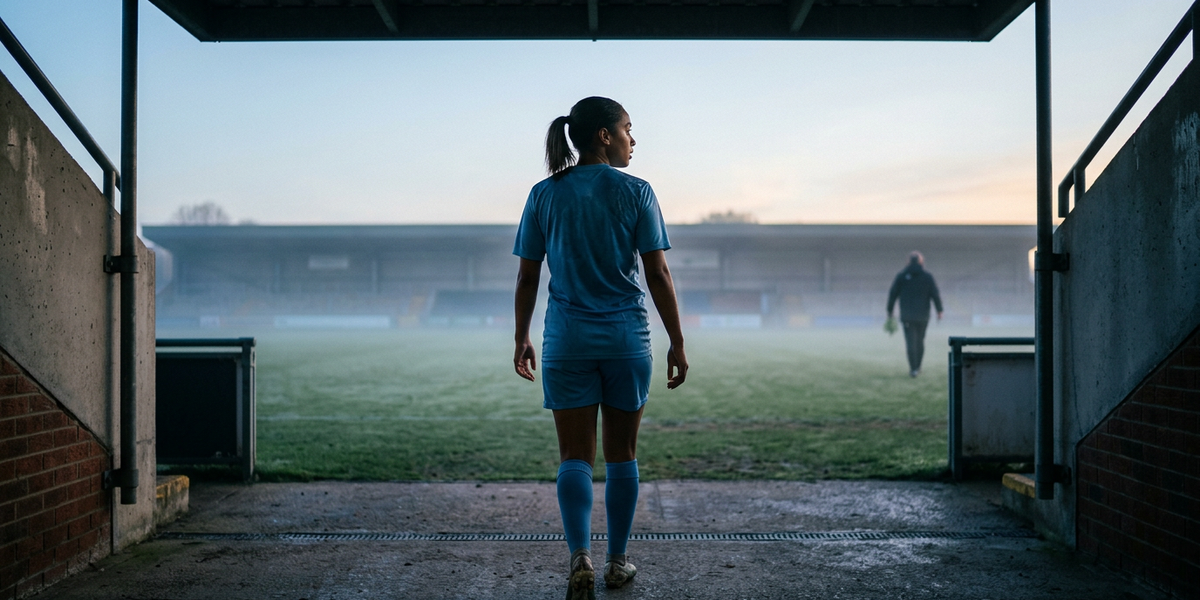
The importance of fitness testing in modern football
Modern football is faster and more demanding than ever before. If you watch a Premier League or MLS match today, the distance covered at high intensity is significantly higher than it was just a decade ago. Every trial at a professional academy or semi professional club will start with a baseline assessment of your physical capabilities. These tests are not just about how fast you can run. They measure your heart rate recovery, your aerobic capacity, and your mental toughness under fatigue.
Scouts and coaches use these tests as a filter. If two players have similar technical abilities, the club will almost always choose the one with the superior engine. High fitness levels allow you to maintain technical precision in the 80th minute when others are making mistakes. Being prepared for these tests is the difference between making a great first impression and being sent home before the match based drills even begin. In the 2026 season, data is king and these numbers often dictate your future at a club.
Key takeaways
Focus on the Yo Yo Intermittent Recovery Test as it mirrors the stop and start nature of football better than the standard bleep test. Aim for levels 13 to 15 if you are targeting elite Category 1 academies or professional first team environments. Practice 180 degree turns at the line to save energy and reduce the physical toll on your joints during the test. Structure your training with a mix of VO2 max intervals and sport specific shuttle runs at least six weeks before your trial. Present your fitness scores professionally on your player profile to attract interest from scouts searching for high output athletes.
Understanding the bleep test versus the yo yo test
Many players use the terms bleep test and Yo Yo test interchangeably, but they are different protocols. The bleep test is a continuous 20 meter shuttle run where the pace increases every minute. There is no rest. It is a pure measure of your maximal aerobic speed. While it is still used by some clubs, it is becoming less common in football because the sport is not a continuous steady state activity. If you are preparing for a trial, you should ask which one the club uses, but prepare for both.
The Yo Yo intermittent recovery test is the current gold standard across Europe and the US. It also uses 20 meter shuttles, but it includes a 10 second active recovery period after every 40 meters. This recovery phase allows you to walk or jog around a cone before starting the next shuttle. This test is much more relevant to football because it mimics the sprint, recover, and repeat cycle of a match. Understanding the timing of the bleeps for the specific test you are facing is a critical part of your preparation.
Football fitness standards for academies 2026
To succeed this season, you need to know the benchmarks. For a 14 year old at a Category 1 academy in England, a bleep test score of level 12 is generally expected. By age 16, that expectation rises to level 13 or 14. If you are an aspiring professional player aged 18 or older, you should be aiming for level 15 as a minimum. Midfielders are often expected to reach even higher levels, sometimes pushing into level 16 or 17 because of their role in covering the most ground during a game.
In the United States, college coaches looking for D1 recruits often use these tests during summer camps. They look for players who show they have done the work in the off season. A level 14 on the Yo Yo test will place you among the top tier of recruits. In Germany and Spain, where tactical pressing is a huge part of the game, fitness standards are incredibly strict. If you cannot hit the minimum levels, you will likely struggle to get a trial regardless of your ball skills. Knowing these numbers gives you a concrete goal to work toward in your training sessions.
Specific training drills to improve your shuttle scores
You cannot prepare for a shuttle test by only doing long distance road running. While base endurance is helpful, you need to train your body for the specific demands of turning and accelerating. One of the best drills is the 15 on 15 off shuttle. Mark out 20 meters and run at about 90 percent of your max speed for 15 seconds, then rest for 15 seconds. Repeat this for 8 to 10 minutes. This builds your anaerobic threshold and gets your legs used to the constant change of direction.
Another vital component is the technique of the turn. Instead of taking a wide circular turn which wastes time and energy, practice the pivot. Plant one foot on the line, drop your center of gravity, and explode back in the opposite direction. Alternating the foot you use to turn is also important to prevent one side of your body from fatiguing faster than the other. Adding these specific movements to your weekly routine will help you find out how to get a trial and actually succeed when you arrive.
The mental game and pacing strategies for success
The bleep test is as much a mental challenge as it is a physical one. Most players drop out because their brain tells them to stop before their body actually fails. One effective strategy is to break the test into small blocks. Instead of thinking about reaching level 15, focus only on finishing the current level. Once you finish level 8, tell yourself the real test starts now. Using positive self talk and focusing on your breathing can help you push through the moments where your lungs feel like they are burning.
Pacing is another area where players fail. In the early levels, the pace is very slow. Many players make the mistake of sprinting early and arriving at the line 5 seconds before the bleep. This is a waste of energy. You should aim to arrive at the line exactly as the bleep sounds. This preserves your glycogen stores for the later, more difficult stages. Staying calm and rhythmic in the beginning allows you to stay relaxed for the high intensity finish. Check our highlight video tips to see how to record your fitness accomplishments for scouts.
Pre test nutrition and recovery protocols
What you do in the 48 hours before a fitness test will heavily influence your score. Carb loading is not necessary for a short test, but you do need full glycogen stores. Eat a meal rich in complex carbohydrates like brown rice or sweet potatoes the night before. On the morning of the test, have a light breakfast such as oatmeal with a banana about 3 hours before you start. Hydration is key. Dehydration of even 2 percent can lead to a significant drop in aerobic performance and cognitive focus.
Recovery in the week leading up to the test should involve a taper. Do not perform heavy leg strength sessions or long exhausting runs within 3 days of the assessment. You want your legs to feel fresh and snappy. Dynamic stretching is better than static stretching before the test properly begins. Focus on opening up your hips and activating your glutes. This ensures you can perform those sharp 180 degree turns without risking a groin strain or feeling sluggish in the opening levels.
How to present your fitness data to scouts and clubs
Once you have achieved a strong score on a bleep test or Yo Yo test, you need to make sure coaches know about it. A scout might watch you play and think you look fit, but having a verified number on your profile provides objective proof of your value. When you build a football CV, include a section specifically for physical metrics. List your latest Yo Yo test score, your 30 meter sprint time, and your vertical jump height. This data creates a more complete picture of your athletic potential.
Clubs in 2026 are increasingly looking for players who are self motivated. Recording a video of yourself completing a fitness test or showing a screenshot of your GPS data from a session can be very persuasive. It shows that you are professional and dedicated to your craft. If you are applying to academies abroad, having these stats readily available allows recruiters to compare you against their current players immediately. It can be the factor that gets your CV moved to the top of the pile.
Common mistakes to avoid during fitness testing
One of the most common mistakes is wearing the wrong footwear. If you are doing the test on grass, wear studs to prevent slipping during the turn. If it is on a hard court or 4G surface, ensure your shoes have enough grip. Slipping once can cost you the half second you need to stay in the test. Another mistake is failing to touch the line. Coaches and scouts are very strict about this. If you turn short of the line, you will get a warning and eventually be disqualified even if you have the energy to continue.
Avoid starting too fast and getting caught in the competitive trap of trying to beat everyone in the first three minutes. The only person you are competing against is the clock and your own previous personal best. Also, do not ignore your breathing. Many players hold their breath during turns or when they feel under pressure. Deep, rhythmic breathing helps deliver oxygen to your muscles and keeps your heart rate stable. Practice breathing in through your nose and out through your mouth until it becomes a natural part of your running rhythm.
The role of consistent monitoring in player development
Fitness testing should not be a one time event before a trial. It should be a consistent part of your seasonal development. By testing yourself every 8 to 12 weeks, you can see if your training program is actually working. If your scores are not improving, you may need to adjust your intensity or your recovery. This level of self awareness is what separates amateur players from those who eventually sign professional contracts. It shows a level of maturity that coaches at high level clubs deeply appreciate.
Tracking your data also helps you identify your specific player type. If you have an incredible Yo Yo score but struggle with short sprints, you might be best suited as a box to box midfielder. If your sprint times are elite but your endurance is lower, you might be a natural winger or striker. Use these tests to understand your strengths and weaknesses. In the modern game, having a clear identity as a player helps scouts understand how you would fit into their specific tactical system.
Taking the next step in your football career
Preparing for a fitness test is an investment in your future. It requires discipline, sweat, and the willingness to push past your comfort zone. When you step onto that pitch for your next trial, knowing you have done the work will give you a massive psychological advantage. You won't be worried about the bleeps. You will be focused on showing your quality with the ball. Use the tools available to you and start building your athletic profile today.
The 2026 season offers more opportunities than ever for players who are prepared. Whether you are aiming for a scholarship in the US, a professional contract in Europe, or a spot in a local elite academy, your physical conditioning is the foundation of your game. Don't leave your success to chance. Train specifically, document your progress, and present yourself as a professional athlete. Your dream of playing at the highest level starts with the work you do when nobody is watching.