
The Challenge of Life as an Unattached Player
Being a free agent is one of the most mentally and physically demanding periods a footballer will face. Whether you have just been released from a Category 1 academy in England or finished a four year scholarship in the US college system, the sudden loss of structure can be jarring. Without a coach to design your sessions or teammates to push your limits, it is easy to let your standards slip. The reality is that your next opportunity could come at any moment through a phone call or an email, and you must be ready to hit the ground running immediately.
Staying sharp as a free agent footballer requires more than just jogging around a local park. It demands a professional level of discipline and a structured training plan that mimics the intensity of a club environment. In the modern game, scouts and coaches have zero patience for players who arrive at trials unfit. This guide provides a comprehensive roadmap for maintaining elite performance levels while unattached, ensuring that when that trial date arrives, you are the sharpest player on the pitch.
Key takeaways
Create a rigid weekly training schedule that balances high intensity interval running with ball mastery. Maintain a professional athletes diet and sleep routine to avoid physical regression during the offseason. Join local semi professional or amateur teams for training sessions to keep your spatial awareness and match IQ high. Build a digital presence with a professional CV and highlight reel to remain visible to scouts and recruitment departments. Focus on mental resilience by setting small, achievable daily goals to combat the isolation of being unattached.
The Physical Blueprint Elite Conditioning for Free Agents
Conditioning is the first thing to decline when a player is out of a team environment. To stay sharp, you must focus on football specific fitness rather than general endurance. This means incorporating repeat sprint ability and change of direction drills into your routine. A typical session should involve 400 meter or 800 meter intervals at 90 percent of your maximum heart rate. For example, performing six 400 meter runs with 60 seconds of rest between each will build the aerobic capacity needed to sustain 90 minutes of high intensity play.
Strength and power are equally important for winning 1v1 duels and preventing injuries. Focus on compound movements such as squats, deadlifts, and lunges combined with plyometric exercises like box jumps and broad jumps. Unattached players often make the mistake of neglecting these explosive movements, which leads to a loss of the first yard of pace. Aim for two dedicated strength sessions per week, focusing on quality of movement and explosive power rather than just lifting heavy weights. This keeps your muscles primed for the sudden bursts of speed required in competitive matches.
Technical Mastery Maintaining Your Touch in Isolation
Without a squad to train with, your technical work must become highly intentional. Individual football drills for unattached players should focus on the four core pillars: receiving, passing, dribbling, and finishing. Use a wall to simulate a teammate for one touch passing drills. Target specific bricks on the wall to improve your accuracy under pressure. You should aim for at least 500 touches of the ball in every session, alternating between your left and right foot to ensure you remain two footed and versatile.
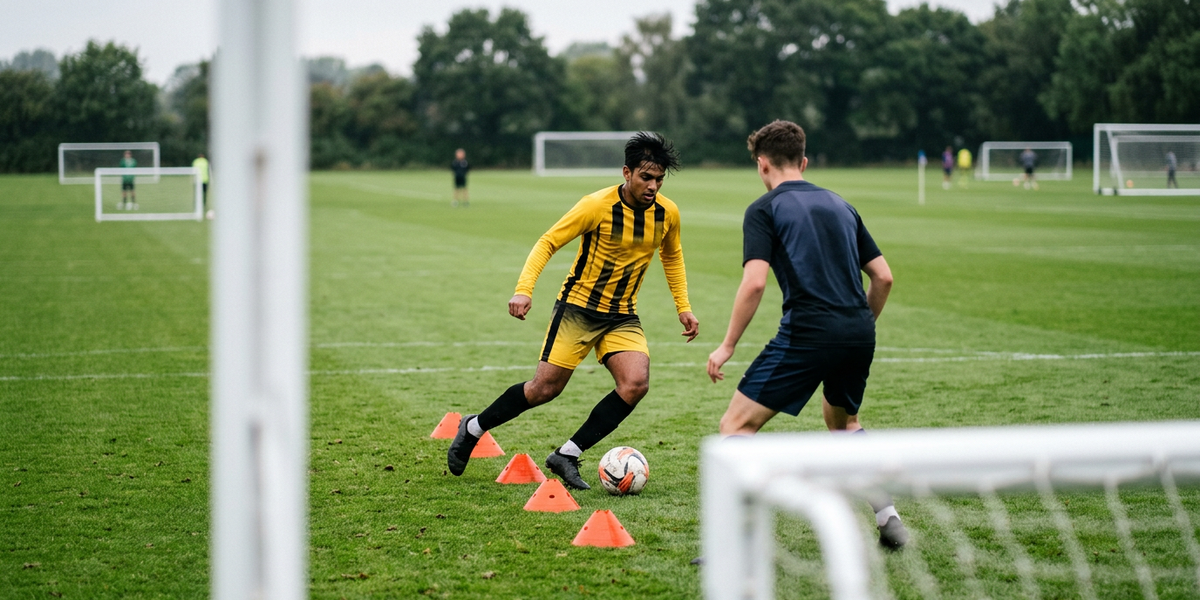
Dribbling drills should utilize cones or even jumpers to create tight spaces. Work on modern movements such as the La Croqueta or quick step overs at high speed. It is vital to perform these drills at match tempo. Drifting through cones at 50 percent speed will not prepare you for a trial at a club like Fleetwood Town or a side in the Irish Premier Division. Record your sessions to analyze your body position and the speed of your feet. This self analysis helps you identify technical flaws that a coach would usually point out in a team setting.
The Psychological Game Staying Mentally Resilient
The mental aspect of being a free agent is often harder to manage than the physical side. Dealing with rejection and the uncertainty of when the next contract will come can lead to anxiety and a loss of motivation. To combat this, you must treat your recovery or job hunt like a full time job. Wake up at the same time every day, follow your schedule religiously, and track your progress in a training diary. Seeing your sprint times improve or your technical drills becoming sharper provides a sense of accomplishment that keeps you moving forward.
Visualization is a powerful tool used by elite professionals like Erling Haaland and Cristiano Ronaldo. Spend ten minutes each day visualizing successful moments on the pitch, such as scoring a goal or making a goal saving tackle. This keeps your neural pathways active and ensures that you do not feel like a stranger to the game when you eventually return to a team. Surround yourself with a positive support network of family and friends who understand your goals. Avoid isolating yourself, as social interaction is crucial for maintaining a healthy mindset during tough periods.
Managing Your Nutrition and Recovery Off the Pitch
When you do not have a club nutritionist monitoring your body fat levels, it is easy for your diet to slip. However, a free agent must eat like a professional every single day. Focus on lean proteins such as chicken, turkey, and fish to support muscle repair. Carbohydrates should be timed around your training sessions to provide the necessary energy for high intensity drills. Complex carbs like brown rice, sweet potatoes, and oats are essential for sustained energy levels. Avoid sugary snacks and processed foods that cause energy crashes and lead to unwanted weight gain.
Recovery is just as important as the training itself. Since you are likely training alone, you can customize your recovery to your specific needs. Incorporate foam rolling, stretching, and mobility work into your daily routine to prevent tightness and injuries. Cold water therapy, such as ice baths or even cold showers, can help reduce muscle soreness after intense sessions. Ensure you are getting at least eight hours of high quality sleep every night. Sleep is when your body undergoes the most significant repair and hormone regulation, making it the most effective recovery tool available to an unattached player.
Networking and Visibility Finding Your Next Opportunity
Staying sharp on the pitch is only half the battle. You also need to be proactive in finding a new club. This involves reaching out to your network of former coaches, teammates, and scouts. Do not be afraid to send a professional message to heads of recruitment or academy managers. Mention your recent training history and express your desire for a trial. In the modern era, having a digital resume is non negotiable. You need to how to make a football CV that presents your stats and career highlights in a clear format.
Social media can also be a powerful tool if used correctly. Post short clips of your individual training sessions on platforms like LinkedIn or Instagram to show that you are fit and ready. Tag relevant scouts and clubs, but keep the content professional and focused on your footballing ability. Many clubs now use video analysis and digital platforms to identify talent outside of traditional scouting windows. By being visible and active online, you increase your chances of being noticed by a recruitment department looking for a specific type of player to fill a gap in their squad.
The Reality of Trialing for Professional Clubs
When you finally secure a trial, the intensity will be significantly higher than your individual training. Clubs often put trialists through a series of fitness tests first to ensure they meet the minimum physical requirements. You might face a Bronco test or a Yo Yo test on your first day. Being prepared for these specific tests is essential. If you pass the physical evaluation, you will then be integrated into small sided games and tactical sessions. This is where your spatial awareness and decision making will be under the microscope.
During the trial, focus on doing the simple things exceptionally well. Coaches are looking for players who can follow instructions, work hard for the team, and display a high level of technical consistency. Do not try to overcomplicate your game to impress. A reliable performance is often more valuable than a flashy one that ends in a loss of possession. Communicate loudly, show leadership qualities, and demonstrate that you have been working hard during your time as a free agent. Your attitude and work ethic can often be the deciding factor in whether you are offered a contract or not.
Strategic Career Mapping Beyond the Pro Game
If professional offers are slow to materialize, you should consider other pathways within the game. Semi professional football in leagues like the National League in England or the USL in the United States can be an excellent way to maintain match fitness and gain exposure. Many players have used these leagues as a springboard to get back into the professional game. Additionally, look into open football trials 2026 events which are often attended by scouts from various levels of the football pyramid.
Education is another vital component of a well rounded career plan. If you are a young player, consider the US college route where you can earn a degree while playing at a high level. Many MLS teams draft players directly from the college system. Alternatively, look into coaching badges or sports science qualifications. Having a backup plan does not mean you have given up on your dream. It actually reduces the pressure on your footballing performance, allowing you to play with more freedom and confidence during trials and matches.
Building Your Professional Footballer CV
Your football CV is the most important document in your professional kit bag. It serve as your first impression for scouts and managers who may never have seen you play in person. Start with a clean layout that lists your primary and secondary positions, your date of birth, and your citizenship status. Include a summary of your key strengths, such as your passing range or your ability to win 1v1 duels. Use real data where possible, such as your top speed in kilometers per hour or your assist numbers from previous seasons.
To ensure your profile stands out, you should build a football CV using a dedicated platform that scouts actually use. Link your CV to a high quality highlight video that shows you performing in competitive matches. Avoid long intros and loud music in your video. Get straight to the action within the first ten seconds. Consistency is key, so keep your CV updated with your latest training achievements and any friendly matches you participate in. A well maintained CV shows scouts that you are professional, organized, and serious about your career.
Take the Next Step in Your Career
Being unattached is a temporary phase, not the end of your story. By following a professional maintenance plan and staying proactive in your search for a new club, you can turn this period of uncertainty into a season of growth. Now is the time to organize your professional information and make it easy for scouts to find you. Create your free profile on FootballersCV and start connecting with the global football community today.