
The Modern Scout Profile for Center Backs
In 2026 scouts from Category One academies in the UK and top European clubs like Ajax or Benfica are no longer just looking for the biggest kid on the pitch. Physicality is a prerequisite but the real differentiator is tactical intelligence. When a scout watches a center back they are looking at where you are when your team does not have the ball. They want to see if you anticipate danger before it happens or if you are constantly reacting late to opposition movements.
An elite defender understands that the best tackle is the one they never have to make. By mastering football positioning for center backs you demonstrate that you have the mental capacity to play at a professional level. Scouts focus heavily on your ability to maintain a high line without being exploited and your awareness of both the ball and the furthest attacker. These subtle details separate a Sunday League defender from a future pro.
The Foundation of the Strong Defensive Line
The defensive line is a living organism that must breathe and move as one. A common mistake for young defenders is ball watching which leads to losing track of the defensive line depth. You must constantly check your shoulders to align yourself with your fellow center back and full backs. If you drop too deep you play everyone onside. If you push too high without pressure on the ball you leave yourself vulnerable to a simple chip over the top.
To play center back like a pro you must master the concept of the pendulum. When the ball moves to the left flank the entire unit slides left. The near side center back engages or supports while the far side center back tucks in to cover the space behind. This creates a compact block that is difficult for midfielders to penetrate. Keeping a consistent gap of roughly eight yards between you and your partner is a gold standard in modern tactical setups.
Mastering the Art of the Body Profile
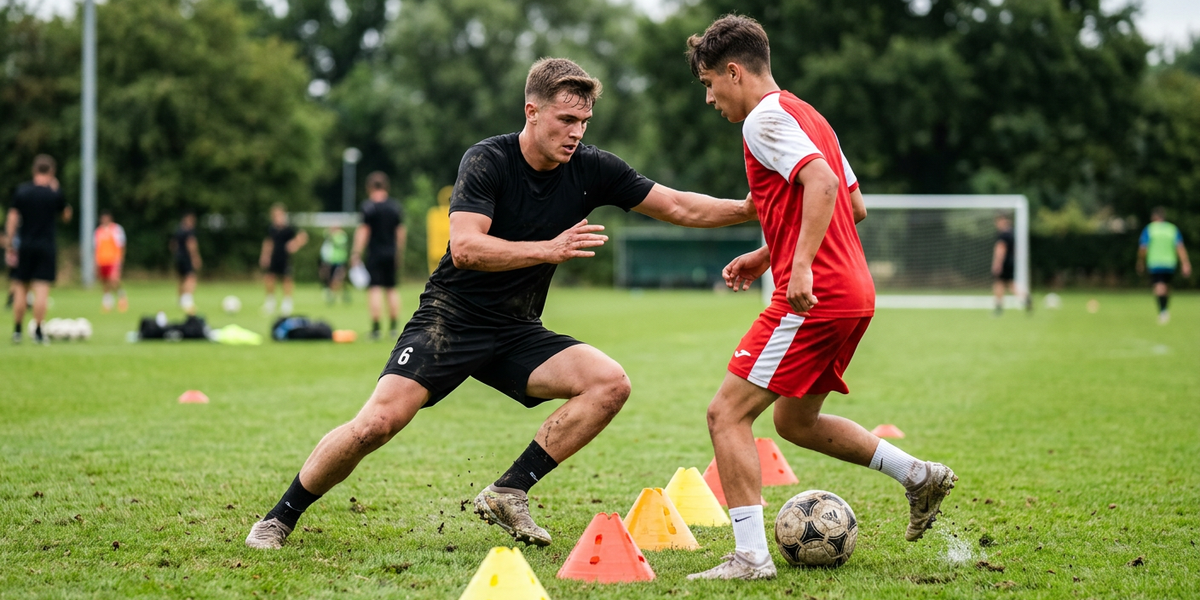
Your physical orientation determines how quickly you can react to a change in play. Never stand with your chest flat toward the attacker. Instead adopt a side on stance with your knees slightly bent and feet at a forty five degree angle. This position allows you to either sprint backward to track a runner or step forward to intercept a pass. If you are caught flat footed a fast striker will turn you every single time.
Scouting criteria for defenders include how well you adjust your body as the ball moves across the pitch. Every time the ball is played to a different opponent you should be making micro adjustments to your feet. This is called footwork efficiency. In high intensity games these small movements save you split seconds which can be the difference between a clean sheet and conceding a late goal in a trial match.
Communication as a Tactical Tool
A center back must be the loudest player on the pitch. Your positioning is only effective if you can also position those around you. You have the entire game in front of you so it is your job to coach your holding midfielder and full backs. Use short and sharp commands like step up or squeeze or away. This shows scouts that you are a leader who understands the tactical landscape of the match.
Proper communication prevents gaps from opening in the defensive structure. If you see a striker making a run across your partner you must shout their name and gesture where the runner is going. This level of tactical awareness for footballers is highly valued because it reduces the workload for everyone else. It proves you are thinking about the game at a strategic level rather than just chasing the ball.
Defensive Positioning Drills for Individual Growth
You do not always need a full team to practice your positioning. There are several defensive positioning drills you can do with a partner or even solo. Set up four cones in a diamond shape and practice shifting your body weight from side to side while keeping your eyes on a moving target. This builds the muscle memory needed to stay side on during a real match scenario. High repetition of these movements is key to making them second nature.
Another effective drill involves a partner throwing balls over your head into space. You must practice the drop and turn technique where you sprint back while looking over your shoulder to locate the ball and the imaginary striker. Focus on your recovery lines. You should always aim to run toward the center of your goal rather than following the attacker into wide areas where they are less dangerous. These drills sharpen your spatial awareness for those high pressure trial moments.
Translating Tactical Intelligence to Your Football CV
Once you have mastered these technical aspects it is vital to showcase them to the right people. A simple list of clubs you played for is not enough in the modern game. Your player profile should highlight your tactical strengths such as your ability to lead a back four or your success rate in interceptions versus tackles. Mentioning that you have been coached in specific tactical systems like a high press or a low block tells a scout you are ready for a structured academy environment.
At FootballersCV we help you translate your on pitch intelligence into a professional digital format. By documenting your tactical development and sharing footage of your positioning you give yourself the best chance of being spotted by scouts who are looking for the next intelligent defender. Do not leave your career to chance. Ensure your CV reflects the hard work you put into mastering the defensive line this season.
Visit https://footballerscv.com to start your journey and get noticed by scouts today.