
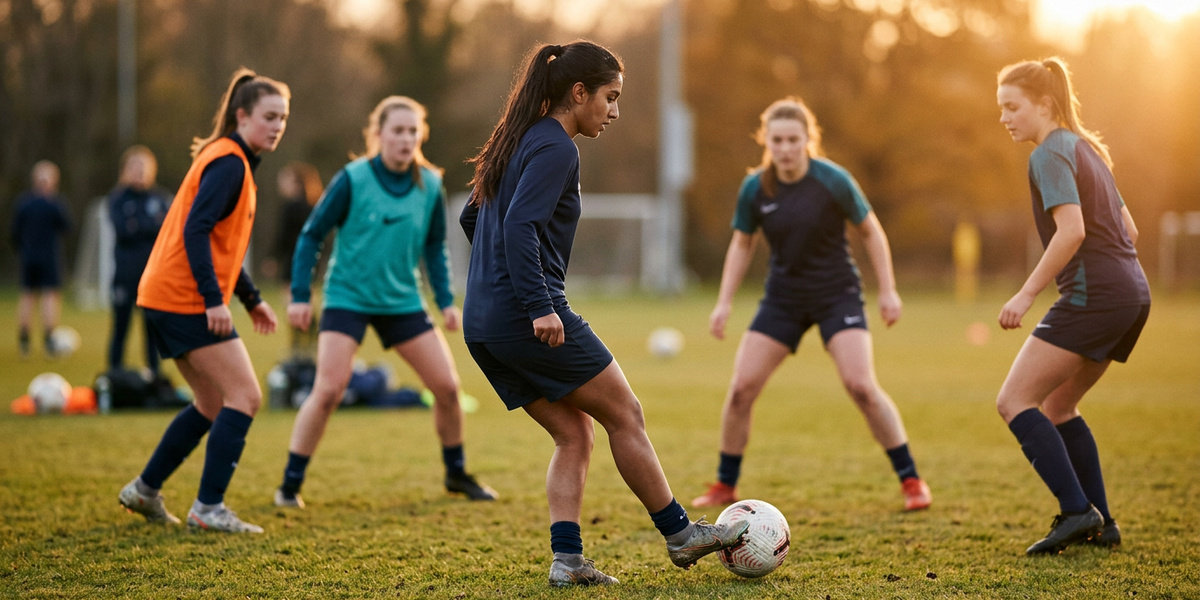
The evolving role of the modern fullback in 2026
The FB position has undergone a massive transformation in the last decade. Gone are the days when a fullback was simply a failed center back or a defender tasked only with staying behind the ball. In 2026, scouts from Premier League Category 1 academies and MLS academies view the fullback as one of the most technically demanding roles on the pitch. You are expected to be an elite defender, a tireless engine, and a creative force all at once. If you are aiming for a professional contract, you must understand that scouts are looking for a complete package.
Current football trends lean heavily toward high pressing and possession based play. This means that as a fullback, you are often the outlet for your goalkeeper or the player responsible for providing width when the wingers tuck inside. Scouts evaluate the specific way you receive the ball under pressure and whether you have the vision to spark an attack from a deep position. They are no longer just watching your tackles. They are watching your passing completion percentage and your ability to break lines with progressive carries.
At the youth level, particularly for those aged 14 to 18, the margin for error is slim. Clubs like Manchester City, Ajax, and Benfica have set the gold standard for what a fullback should look like. They want players who can transition from a defensive block to an offensive threat in seconds. This article will break down the precise criteria scouts use to judge your performance so you can tailor your game to meet 2026 standards. Understanding these traits is the first step in learning how to make a football CV that actually stands out to recruitment departments.
Key takeaways
Scouts prioritize 1v1 defensive dominance and the ability to delay attackers during transition moments. Tactical versatility, including the ability to play as an inverted fullback or a traditional wingback, is a major advantage. High intensity running capacity and repeat sprint ability are non negotiable physical requirements for elite academies. Quality of delivery from wide areas, including early crosses and cutbacks, is the primary offensive metric scouts track. Cognitive skills like scanning and spatial awareness are evaluated to see if a player can handle the speed of professional play.
Tactical intelligence and spatial awareness
Tactical intelligence is the most difficult trait to teach, which is why scouts look for it so intently. In 2026, a fullback must demonstrate an innate understanding of distances. Scouts watch how you position yourself relative to your nearest center back. If the gap between you and your teammate is too wide, a smart attacker will exploit that space. If it is too narrow, you leave the flank exposed. Pro scouts look for players who can subconsciously adjust their positioning as the ball moves across the pitch. Every step you take should have a purpose.
Scanning is a vital component of this tactical awareness. A scout will often watch a player specifically when the ball is on the opposite side of the field. Are you checking over your shoulder? Do you know where the opposite winger is? For an academy fullback, being caught ball watching is a major red flag. They want to see that you are constantly processing information. This allows you to intercept passes before they reach the target, which scouts value more than a last ditch sliding tackle. Interceptions show you are reading the game ahead of time.
Another tactical element is the timing of your forward runs. A common mistake young players make is overlapping at the wrong time, leaving their team vulnerable to a counter attack. Scouts look for players who recognize the visual cues for an overlap. For example, if your winger has successfully pinned the opposing fullback inside, that is your cue to fly past on the outside. If the winger is being double teamed, you might need to stay deeper to provide a safe passing option. This level of decision making separates top prospects from those who simply run fast without a plan.
One versus one defensive excellence and body shape
Defending is still the primary duty of any player in the back line. When a scout watches a fullback, they are waiting for the moment an isolated 1v1 occurs. They look at your body shape immediately. Are your knees bent and your weight on the balls of your feet? Are you showing the attacker down the line or allowing them to cut inside onto their stronger foot? A high level scout wants to see a low center of gravity and the patience to wait for a heavy touch before committing to a tackle. Diving in is a sign of a defender who lacks composure.
The terminology often used by recruitment staff is "jockeying" and "delaying". In modern football, stopping a cross or a shot is often more about your positioning than the tackle itself. Scouts look for your ability to "show" the attacker away from the danger zone. If you are playing against a dangerous inverted winger who wants to cut inside and shoot, your job is to guide them toward the corner flag. Your success in these duels is often measured by how many crosses or shots you successfully block or prevent. This is a critical metric during the process of how to get a trial at a professional club.
Recovery pace is the final piece of the 1v1 defensive puzzle. Even the best defenders get beaten occasionally. Scouts watch your reaction to losing a duel. Do you drop your head and give up, or do you sprint back at 100 percent intensity to recover your position or provide cover? This demonstrates the defensive work rate that coaches love. In an academy setting, scouts are looking for players who take pride in their defensive contributions and celebrate a clean sheet as much as a goal.
Technical mastery in the final third and crossing accuracy
Once you transition into the attacking phase, your technical quality becomes the focal point. Scouts in 2026 are highly analytical about crossing. They do not just look for a ball swung blindly into the box. They look for "meaningful delivery." This includes low, driven crosses across the six yard box, lofted crosses to the back post, and cutbacks to the edge of the area. If you can vary your delivery based on the movement of your strikers, you will immediately catch the eye of any scout in attendance. High quality technical execution under pressure is rare.
Your first touch must be flawless. Fullbacks often receive the ball while moving at high speeds or while pinned against the touchline. A scout will evaluate whether your first touch sets you up for your next action. If your first touch is heavy and goes out of play, or forces you to turn back toward your own goal, it kills the momentum of the attack. They want to see a forward thinking first touch that allows you to drive into space or find a teammate with a first time pass. This technical proficiency is a core part of any football CV example for a top tier defender.
Furthermore, ball retention in tight spaces is essential. Modern fullbacks are frequently pressed by opposing wingers and midfielders. Scouts look for composure and the ability to use your body to shield the ball. They want to see if you can use short, sharp combinations like wall passes or triangles to play out of pressure. This requires a high level of technical skill and a calm temperament. If you can consistently find a teammate while under heavy pressure, you prove you are ready for the intensity of senior football.
Physical benchmarks for elite academy fullbacks
Physically, the fullback position is arguably the most demanding on the pitch. Scouts look for a specific athletic profile that combines endurance with explosive speed. Most elite academies will conduct GPS tracking during matches to measure high speed distance and the number of sprints performed. A scout will look for your "second wind." Can you still make a 40 yard overlapping run in the 85th minute after defending a 1v1 in the 10th minute? This repeat sprint ability is what separates academy starters from squad players.
Strength and aerial ability are also vital, even for shorter fullbacks. You will often be required to defend the back post against tall strikers or physical wingers. Scouts look for your vertical jump and your timing in the air. They also assess your functional strength in shoulder to shoulder duels. You need to be able to hold your own against powerful attackers. While you do not need to be a giant, you must be "difficult to play against." This involves using your body efficiently to win fouls or disrupt the opponent's rhythm.
Agility and change of direction are the final physical components. Because you are constantly shifting from an attacking stance to a defensive one, your footwork must be rapid. Scouts watch how quickly you can turn when a ball is played over your head. If you are slow to turn, you will be exploited by quick wingers. Training with footwork ladders and short shuttle runs can help you develop the sharpness needed to mirror an attacker's movements. High levels of agility are a hallmark of players who successfully navigate football trials 2026.
The rise of the inverted fullback and versatility
In 2026, tactical flexibility is a massive asset. Pep Guardiola and other top managers have popularized the use of "inverted fullbacks" who move into the midfield during the build up phase. If you can demonstrate that you are comfortable playing in central areas, your value to a scout doubles. They look for players who can receive the ball with their back to goal and turn into space, much like a central midfielder would. This requires excellent 360 degree awareness and a diverse passing range.
Versatility also means being able to play on both sides of the pitch. While most fullbacks have a preferred foot, being able to play as a left back when you are right footed is a huge advantage for a coach's squad depth. Scouts note if you can use your weaker foot for simple passes and clearances. If a scout sees a right footed player comfortably delivering a cross with their left foot, they immediately upgrade that player's technical rating. It shows dedication to the craft and a high ceiling for development.
This versatility extends to your role in different formations. Can you play as a traditional fullback in a back four and as an aggressive wingback in a back five? Scouts want to see if you understand the different defensive and offensive responsibilities of these roles. In a back five, you are expected to be almost like a winger, whereas in a back four, your defensive duties are more rigid. Demonstrating this tactical fluidity proves that you are a "coachable" player who can adapt to any system.
Psychological resilience and leadership on the flanks
The mental side of the game is often where prospects fail. Fullbacks are often isolated on the touchline, right in front of the fans and the coaches. Scouts look for psychological resilience. If you make a mistake that leads to a goal, how do you respond? Do you shy away from the ball, or do you demand it again immediately? Scouts want to see a "warrior" mentality in their defenders. They want players who are vocal and organized, helping to coordinate the defensive line.
Communication is a key leadership trait. A fullback has a unique view of the pitch and can see the movements of midfielders and wingers. Scouts listen for your voice. Are you telling your winger when to press? Are you alerting your center back to a runner from deep? Even at the youth level, leadership is highly valued. A fullback who directs their teammates shows that they have a deep understanding of the game and are invested in the team's success. This is a trait often overlooked by players but highly prioritized by recruitment staff.
Lastly, scouts look for "game management" skills. This involves knowing when to slow the game down and when to speed it up. If your team is winning 1 to 0 in the final minutes, a scout wants to see you stay disciplined rather than flying forward on a risky overlap. Understanding the context of the match shows maturity beyond your years. This mental clarity under pressure is exactly what top clubs are looking for when they offer a professional contract. Use our highlight video tips to ensure your reel captures these moments of leadership.
Building a recruitment profile for scouts
To get noticed in 2026, you need more than just talent; you need a professional presentation. Scouts are busy people who often filter through hundreds of players. Having a clear, data driven profile is essential. You should track your own stats if your club does not provide them. Metrics like successful tackles, crossing accuracy, and distance covered are gold for a scout. When you are looking at how to make a football CV, ensure these stats are prominently displayed. Use real numbers from your last season to prove your consistency.
A professional video is your calling card. Instead of just showing goals or fancy tricks, show the "boring" but vital parts of the game. A two minute clip of you consistently winning 1v1 duels, tucking in to cover your center back, and delivering accurate crosses is far more impressive to a professional scout than one fluke goal from 30 yards. Make sure the footage is clear and you are easily identifiable. Scouts want to see your movement off the ball as much as your actions on it.
Networking and visibility are the final steps. You should be proactive in contacting clubs and attending verified trials. However, you must ensure you are targeting the right level. If you are currently playing at a grassroots level, aim for local academy trials or shadow squads first. Use platforms like FootballersCV to put your profile in front of scouts who are actively searching for your position. Being proactive shows the same drive and ambition that you display on the pitch.
Real world examples from top European academies
If you look at the academy products coming out of Chelsea or Borussia Dortmund, you see a clear pattern. Players like Reece James or Achraf Hakimi were identified early because of their physical dominance and technical delivery. Scouts at these clubs look for "high potential" athletes who can be molded into tactical specialists. They look for players who dominate their age group physically but also show the intelligence to play at a higher tempo. Analyzing these players can give you a blueprint for your own development.
In Spain, clubs like Barcelona and Villarreal focus heavily on the fullback's ability to play as an extra midfielder. They want "ball playing" defenders who can maintain a 90 percent pass completion rate. If you watch a La Liga academy game, you will see fullbacks constantly looking for "third man runs" and playing short, intricate passes. If your game is based on technical skill and passing, you should look at the scouting criteria used by these types of clubs. They value your brain and your feet more than your height or power.
In the USA, the MLS Next pathway emphasizes versatility and "engine." Because of the vast distances traveled and the heat in many states, American scouts prioritize players with exceptional fitness levels. They look for fullbacks who can act as the "engine room" of the team, constantly marauding up and down the wing. If you are playing in the US, focusing on your conditioning and your ability to impact the game offensively from wide areas is the best way to get on the radar of professional scouts.
Actionable training drills for aspiring fullbacks
To improve your chances of getting scouted, you must dedicate time to position specific drills. For 1v1 defending, set up a 10 by 10 yard square and have a teammate try to dribble past you. Focus on your stance, staying arm's length away, and watching the ball, not the player's feet. Practice this for 20 minutes three times a week. For crossing, set up targets in the box (cones or bags) representing the "near post," "center," and "cutback" zones. Practice hitting each target with both your laces and the inside of your foot while running at pace.
For conditioning, incorporate "shuttle sprints" into your routine. Sprint 20 yards, rest for 10 seconds, and repeat 10 times. This mimics the stop start nature of the fullback role. To work on your weak foot, find a wall and practice "two touch" passing for 15 minutes every day. Hit the ball with your strong foot and control it with your weak foot, then pass it back with your weak foot. This simple drill will dramatically improve your technical consistency and make you a much more attractive prospect to scouts.
Finally, work on your "scanning" in every training session. Before you receive the ball in any drill, make a conscious effort to look over both shoulders. Ask your teammates to call out numbers or colors behind you that you have to shout back. This trains your brain to process information while the ball is approaching. By mastering these specific drills, you are developing the exact traits that scouts are looking for in 2026. This dedication will naturally lead you toward how to get a trial and eventually, a place in a professional academy.
Join FootballersCV to get noticed by clubs and scouts
Securing a trial at a professional academy requires more than just talent on the pitch; you need a way to show that talent to the right people. At FootballersCV, we provide the tools you need to build a professional identity that grabs the attention of scouts worldwide. From our automated CV builder to our network of professional scouts, our platform is designed to bridge the gap between ambitious young players and the professional game. This season, don't wait for a scout to find you by chance at a rainy weekend match. Take control of your career and put your stats, videos, and history in one accessible place.
Whether you are a fullback looking for an academy spot in the UK or a goalkeeper aiming for a US college scholarship, our platform serves every corner of the globe. Creating a profile is quick and easy, allowing you to list your height, weight, preferred foot, and key achievements. You can also upload your highlight reels, ensuring that when a scout searches for a fullback with your specific traits, your name appears at the top of their list. Join thousands of other players who are using FootballersCV to take the next step in their football journey. Create your free profile today and start making your professional dreams a reality.