
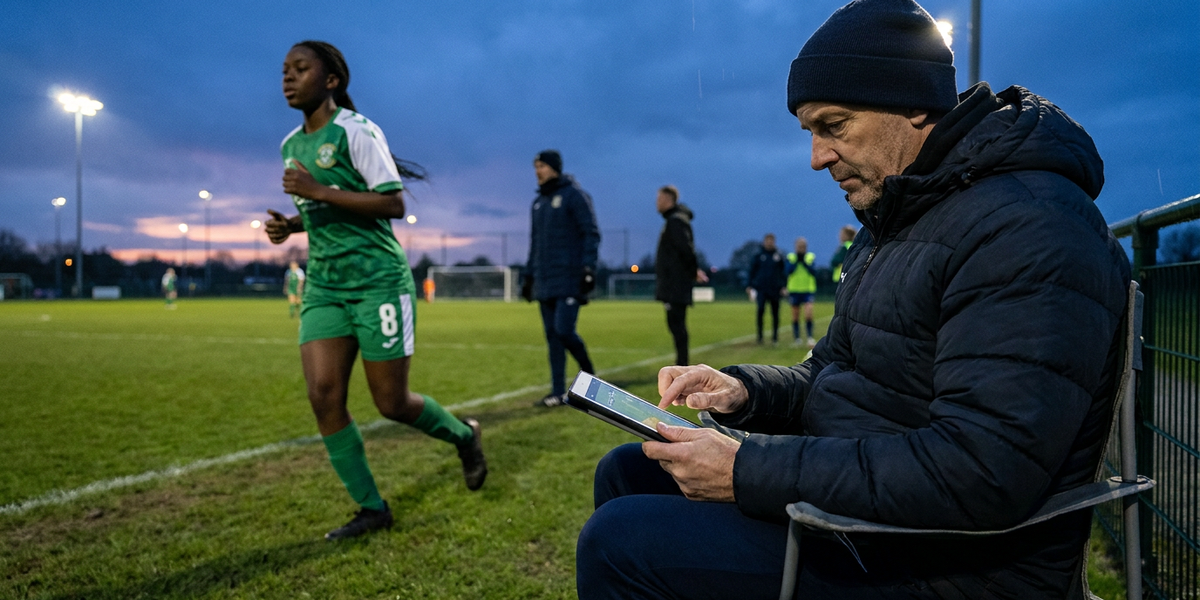
What scouts look for in box to box midfielders in the modern game
To dominate as a box to box midfielder, you must be the most complete player on the pitch. Modern scouts define this role as the engine room of the team, requiring a unique blend of tactical intelligence, a relentless physical engine, and technical versatility. A number eight must influence the game in both penalty areas, acting as a shield for the defense one moment and a goal scoring threat the next. If you cannot maintain high intensity from the first minute to the ninetieth, you will struggle to meet the recruitment standards of top academies and professional clubs.
Scouting criteria in 2026 prioritize players who can navigate the transition phases of play. This means reacting instantly when possession changes hands. Whether you are playing in the ECNL in the United States or a Category One academy in the United Kingdom, scouts are watching your movement off the ball more than your time on it. They want to see a player who scans the field constantly and understands where the space will open up three seconds before it actually does. Being a box to box player is not just about running, it is about running with a specific purpose.
Key takeaways
A high level of aerobic and anaerobic fitness is non negotiable for this role. Success is measured by your ability to impact both defensive and attacking transitions. Technical efficiency under pressure is more important than flashy skills. Vocal leadership and scanning are the primary indicators of tactical intelligence. Scouts look for mental grit and the willingness to track back when exhausted.
Defining the physical engine required for central roles
The physical demands of a box to box midfielder are arguably the highest of any position on the pitch. In a standard ninety minute match, a top tier number eight will cover between eleven and thirteen kilometers. However, the total distance is less important to scouts than the number of high intensity sprints you perform. They are looking for players who can produce explosive bursts of speed to close down an opponent or join a counter attack, even in the closing stages of a tight game.
To reach this level, your training must go beyond steady state jogging. Scouts and coaches at clubs like Ajax or Manchester City look for players who possess incredible recovery speed. This means your heart rate returns to a functional level quickly after a maximal effort. If you are huffing and puffing with your hands on your knees after one long run, you are signaling to the sidelines that you lack the engine required for professional football. Focus on shuttle runs and interval training that forces you to change direction frequently.
Tactical intelligence and the art of the transition phase
Tactical intelligence is what separates a marathon runner from a footballer. Scouts want to see that you understand the geometry of the pitch. When your team loses the ball, your first three steps should be toward the most dangerous space or opponent. This is known as the defensive transition. If you stand still to complain to the referee or adjust your socks, you have failed the tactical test. A true box to box player anticipates the turnover and begins their recovery run immediately.
During the attacking transition, the role changes. You must identify if the team needs you to provide a short passing option to retain possession or a vertical run to stretch the defense. Scouts value players who check their shoulders constantly. Scanning the field allows you to know where your teammates and opponents are before you receive the ball. By the time the ball reaches your feet, you should already know if you are going to turn, play a one touch pass, or drive forward into space.
Technical versatility and passing range for the number eight
While a defensive midfielder might focus on short, safe passes, a box to box player needs a diverse passing range. You must be comfortable playing short one twos in tight areas of the midfield while also being able to switch the play with a forty yard diagonal ball to a winger. Scouts are looking for technical efficiency, which means your passes are delivered with the correct weight and to the correct foot of your teammate. If your teammate has to stop their run to collect your pass, you have slowed down the attack.
Ball retention is also critical. In the modern game, losing the ball in the central third often leads to a goal for the opposition. You must be able to shield the ball using your body and use your first touch to escape pressure. Scouts observe how you handle being pressed by two or three opponents. Can you stay calm and find a way out? Learning how to make a football CV that highlights these technical metrics, such as pass completion percentage in the final third, can help you stand out to recruitment departments.
Defensive responsibilities and tracking back with purpose
A common mistake young midfielders make is thinking that their job ends once the ball is past them. Defensive responsibilities for a number eight are constant. You are expected to support your fullbacks and defensive midfielders by creating numerical superiorities. If your fullback is caught out of position, the box to box midfielder is often the one who must fill that gap. Scouts watch for players who show the desire to get goal side of the ball every time the opposition attacks.
Effective tackling and intercepting are also key traits. You do not always need to make a sliding tackle to be effective defensively. Often, simply showing an opponent into a crowded area or cutting off a passing lane is more valuable. Scouts look for players who stay on their feet and use their strength to nudge opponents off the ball. Your defensive contribution is a reflection of your work rate and your commitment to the team result over individual glory.
When to join the attack and making late box entries
The hallmark of a great box to box midfielder is the ability to arrive late in the penalty area. Players like Jude Bellingham or Frank Lampard mastered the art of timing. If you enter the box too early, you are easy to mark. If you arrive just as the ball is being crossed or cut back, you are almost impossible for defenders to track. Scouts look for that instinctive movement where a player recognizes the gap between the opposing center backs and the defensive midfielders.
Knowing when to join the attack requires an understanding of game state. If your team is winning by three goals, you might stay deeper to protect the lead. If you are chasing a goal, you must be brave enough to get forward. However, you must always ensure that the midfield is not left completely empty. Scouts appreciate a player who communicates with their midfield partner, ensuring that if one goes forward, the other sits back to cover the space. Balancing ambition with discipline is the key to mastering the number eight role.
How scouts measure work rate and mental grit under pressure
Work rate is not just about physical output, it is about mental resilience. Scouts are trained to look for your reaction when things go wrong. If you lose the ball, do you sprint to win it back? If a teammate makes a mistake, do you encourage them or do you get frustrated? Mental grit is often tested in the final twenty minutes of a trial match when every player is tired. This is when the best players separate themselves by maintaining their technical standards despite the fatigue.
In 2026, many clubs use GPS data to measure work rate, but the visual observation of a scout is still vital. They look for vocal leadership and how you demand the ball when the pressure is high. A player who hides during the difficult moments of a match will rarely be recruited. Showing that you have the character to lead the press and motivate your teammates is a massive plus point. Documenting your leadership experience and physical stats is a vital part of knowing how to get a trial at a higher level.
Practical drills to improve your midfield performance today
To improve your performance, you should incorporate drills that simulate game scenarios. One effective drill is the box to box shuttle with a ball. Start at one goal line, dribble at high speed to the halfway line, perform a sharp turn, and then sprint to the opposite penalty area to finish on goal. This trains your ability to maintain technical control while your heart rate is elevated. Do this in sets of six to eight repetitions to build specific football endurance.
Another essential exercise is scanning practice. Have a partner stand behind you and hold up different colored cones or numbers while you receive a pass from a third person. You must shout out the color or number before you touch the ball. This forces you to break the habit of looking only at the ball and encourages you to look at the space around you. Finally, work on your long range passing by setting up targets in the corners of the pitch and trying to hit them consistently with both feet. Versatility is your greatest asset.
How to showcase your box to box traits on your player CV
When you build your profile, you need to provide concrete evidence of your abilities. Do not just say you are a hard worker. Instead, list specific statistics such as your average distance covered per match or your successful tackle percentage. If you have played for representative teams or won fitness awards, include those details. Scouts want to see a clear history of your development and your ability to compete at a high level.
Your video highlights should also reflect the specific requirements of the role. A common mistake is only showing goals and assists. A scout looking for a box to box midfielder also wants to see clips of you winning the ball back, making a fifty yard recovery run, or playing a perfectly weighted pass to break the lines. Using highlight video tips to structure your reel will ensure that you capture the scout's attention within the first thirty seconds. Show your range, your work rate, and your tactical awareness in a concise format.
The importance of vocal leadership and pitch communication
Communication is often the most overlooked skill in youth football. A box to box midfielder is perfectly positioned to see the whole pitch and should be the primary communicator for the team. You need to tell your wingers to tuck in, alert your center backs to runners, and encourage your strikers to press. Scouts love a player who is loud and positive because it shows that the player is engaged and understands the game.
Effective communication is not about shouting for the sake of it. It is about providing actionable information to your teammates. Use short, sharp commands like man on, time, or shift left. This level of leadership helps organize the team and makes everyone else's job easier. In a trial environment, the loudest player who is providing helpful instructions often stands out more than the player who scores a lucky goal but remains silent for the rest of the game.
Stand out in your next trial with these actionable steps
To succeed in your next trial, arrive with a mindset of complete dominance. Start the game by making a few simple, successful passes to build your confidence and show the scouts you are reliable. Focus on your movement off the ball from the first whistle. Even if you do not receive the ball, your runs should be sharp and purposeful. Make it impossible for the scout to ignore your presence on the pitch by being involved in every phase of the game.
Finally, ensure your physical preparation is perfect. Sleep, hydration, and nutrition in the forty eight hours before a trial are just as important as the training you do on the pitch. If you show up with high energy and the ability to maintain it for the full duration of the session, you will be ahead of ninety percent of the other players. Combine this physical readiness with a professional player profile and a clear understanding of your role, and you will be well on your way to securing a spot at a top academy or club.