
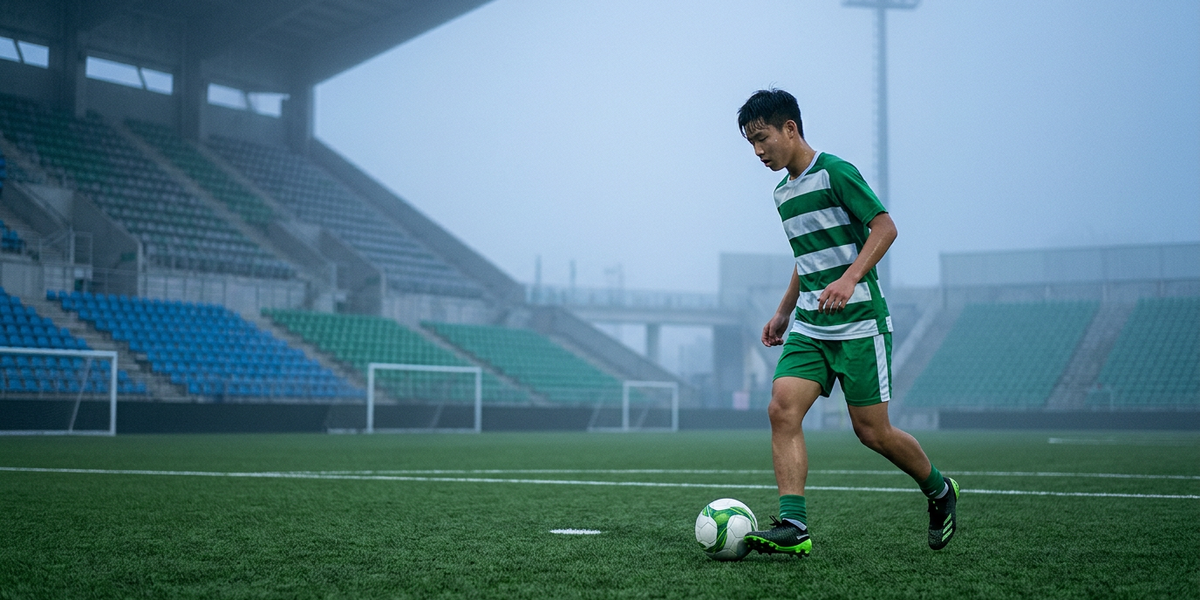
The Importance of Footwear Selection for Modern Trials
The modern football landscape has shifted dramatically over the last decade. Whether you are attending a trial at a Category One academy in the UK or a high level ID camp for US college recruiters, there is a massive chance you will be playing on synthetic surfaces. These modern 3G and 4G pitches are designed to mimic natural grass, but they behave very differently underfoot. Professional clubs and scouts look for players who are prepared for any condition, and turning up with the wrong footwear can immediately mark you as an amateur.
Choosing between football boots for artificial grass vs firm ground is not just about fashion or brand loyalty. It is a technical decision that impacts your acceleration, your change of direction, and your safety. In a high pressure trial environment where every split second counts, losing your footing or feeling discomfort in your soles can be the difference between getting scouted and going home empty handed. Players must understand that artificial turf generates more heat and friction than natural grass, requiring specific technology to manage these forces.
Key takeaways
Always prioritize AG or MG soleplates for synthetic surfaces to ensure even weight distribution and prevent stud pressure. Avoid bladed FG studs on 3G pitches as they increase the risk of serious knee and ankle injuries by catching in the turf. Look for boots with conical or hollow studs which allow for better rotational movement and less stress on joints. Proper footwear selection is a key component of professional trial preparation and demonstrates a serious mindset to scouts and coaches.
Understanding the Technical Differences Between Surface Types
To make an informed choice, you must understand what lies beneath your feet. 3G or Third Generation pitches consist of long synthetic grass blades filled with a mix of sand and recycled rubber crumb. 4G pitches are the latest evolution which often claim to require no infill, though the terms are frequently used interchangeably by coaches. These surfaces provide a consistent bounce and roll but they are significantly harder and more abrasive than a well manicured natural pitch at a professional stadium.
Artificial grass creates a high friction environment. When you plant your foot to change direction, the turf does not give way like soil does. This means all the force of your movement is reflected back into your legs. AG specific boots are engineered with a higher number of studs that are shorter than standard firm ground studs. This design prevents the boot from sinking too deep into the rubber crumb, which is the primary cause of the common stuck in the mud feeling many players experience when wearing the wrong gear.
Why FG Boots Can Be Dangerous on Artificial Grass
Many young players make the mistake of wearing their favorite firm ground boots for every game. While FG boots are excellent for natural grass, they can be dangerous on synthetic turf. The studs on FG boots are often bladed or chevron shaped to provide maximum traction on soft ground. On a 3G pitch, these aggressive blades can bite too hard into the synthetic fibers. If you attempt a quick turn while your studs are locked into the carpet, your foot stays planted while your knee or ankle continues to rotate.
This mechanical mismatch is a leading cause of non contact injuries in youth football. We frequently see serious issues like ligament tears that could have been avoided with better equipment choices. Consulting a guide on ACL injury prevention for footballers highlights how crucial footwear is in maintaining joint stability. Beyond the injury risk, FG boots on artificial grass often lead to stud pressure, a painful condition where the long studs push back against your foot because they cannot penetrate the hard base of the pitch.
The Rise of Multi Ground Boots for Academy Players
For players who need versatility without buying multiple pairs of expensive boots, the Multi Ground or MG boots are a fantastic solution. In 2026, brands like Nike and Puma have perfected the MG plate, featuring a hybrid stud pattern that works effectively on both natural grass and synthetic turf. These boots typically feature a dense arrangement of shorter, round studs that offer enough grip for a dry park pitch but won't snag on a 4G surface. This makes them a very cost effective option for those searching for how to get a trial without a huge budget.
The MG plate is particularly popular in the US youth soccer system and European academies where training happens on turf but matches might occur on natural grass. By using a multi ground setup, a player can maintain a consistent feel for their boots regardless of the venue. This consistency is vital for developing muscle memory in ball control and striking. When you are at a trial, you want as few variables as possible to change so you can focus entirely on your performance.
Injury Prevention Through Proper Stud Configuration
Football injury prevention equipment starts with what is on your feet. A proper AG soleplate often includes secondary traction patterns and textured zones that provide grip without excessive depth. The studs are frequently hollowed out to reduce weight and allow for slight compression upon impact. This minor cushioning effect helps absorb the shock of running on a concrete based synthetic pitch, protecting your lower back and shins from the repetitive jar of modern football.
Scouts often look at a player's movement patterns and fluidity. If you are constantly adjusting your stride or looking down at your feet because you feel unstable, it signals a lack of preparation. Wearing AG specific boots allows you to move with confidence, knowing that your pivot points are designed for rotation. This reduces the torque on your midfoot and helps maintain long term health throughout a grueling season of trials and showcase events.
Performance Impact of Synthetic Turf Footwear
Speed and agility are the hallmarks of a top tier winger or attacking midfielder. On artificial grass, your initial burst of acceleration depends on how the boot interacts with the top layer of the surface. If your studs are too long, you lose precious milliseconds as you struggle to pull your foot out of the turf. AG boots are designed to let you stay on top of the surface, allowing for a quicker release and more efficient energy transfer during high intensity sprints.
Furthermore, the heat management of AG boots is a hidden performance benefit. Synthetic pitches can become incredibly hot, especially during summer trials in warmer climates. Many AG specific boots incorporate heat shields or more breathable upper materials to prevent the bottoms of your feet from blistering. Comfortable feet lead to a focused mind, which is essential when you have only sixty minutes to impress a visiting scout from a professional academy.
Practical Advice for Your Next 3G or 4G Trial
Before you even pack your bag for a trial, research the venue. Most clubs will list the surface type in the trial invitation. If it says 3G or 4G, do not reach for your soft ground boots with metal studs. In fact, most facilities will ban metal studs entirely as they damage the synthetic carpet. Showing up with SG boots is a quick way to get sent home before the warm up even begins. Instead, ensure you have a clean, well maintained pair of AG or MG boots ready to go.
If you are unsure of the surface, bring two pairs of boots. Carry your firm ground boots for natural grass and your artificial grass boots for synthetic surfaces. This level of preparation shows a professional attitude that coaches love to see. It demonstrates that you take your craft seriously and that you understand the technical requirements of the modern game. Always break in new boots for at least two weeks before a trial to avoid blisters and ensure the material has molded to your foot shape.
Maintaining Your Boots for Maximum Longevity and Grip
Synthetic turf is surprisingly dirty. The rubber crumb and sand infill can get lodged in the stud pressure points and wear down the adhesive bond between the soleplate and the upper. After every trial or training session, you should take the time to clean your boots with a damp cloth and a soft brush. Removing the tiny black rubber pellets from the crevices of your AG plate will ensure the studs continue to provide the intended level of grip during your next outing.
Avoid leaving your boots in a hot car or in direct sunlight after a match. The heat can warp the plastic of the soleplate, which is particularly dangerous for AG boots that rely on specific stud alignment for safety. Using a boot tree or stuffing them with newspaper helps maintain the shape. A well cared for pair of boots reflects a player who is disciplined and organized, traits that are just as important to a scout as your crossing ability or tactical awareness.
Building a Professional Image Beyond Your Kit Bag
Having the right football boots for 4G pitches 2026 is a great start, but it is only one part of the professional puzzle. Once you have the gear and the skills, you need a way to present that information to clubs and scouts. In the modern era, a physical CV or a simple email is often overlooked. You need a digital presence that highlights your technical stats, your physical benchmarks, and your match highlights in a format that scouts can access instantly from the sidelines.
Think of your footwear as your physical toolkit and your player profile as your digital toolkit. Professionalism means being ready on and off the pitch. Whether you are playing in a local league or a national trial, you should be documenting your progress. Just as you wouldn't wear blunt studs to a final, you shouldn't approach a scout without a professional way to share your playing history and achievements. High quality equipment and high quality presentation go hand in hand for the modern aspiring pro.
Conclusion and Final Recommendations
Selecting the right football boots for trials on 3G or 4G pitches is a critical decision for any serious player this season. By prioritizing AG or MG configurations, you are making a choice that supports both your performance and your long term physical health. Avoid the trap of wearing aggressive FG blades on synthetic turf, as the risk of injury far outweighs any perceived grip advantage. Professionals choose the tool that fits the task, and synthetic turf requires specific engineering to master.
As you head into your next trial period, remember that every detail matters. From the way you tie your laces to the way you present your career history, scouts are looking for the complete package. Equip yourself with the right footwear, prepare your body for the high intensity demands of artificial grass, and ensure your professional profile is ready to be viewed by the people who can change your career path. Consistency and preparation are what separate the elite from the rest.
Create Your Professional FootballersCV Today
Now that you have the right boots for the pitch, make sure you have the right profile for the scouts. Head over to FootballersCV and build your professional player profile for free to ensure that once you impress on the turf, the clubs have everything they need to sign you. Showcase your stats, highlight your best moments, and take control of your footballing future right now.