
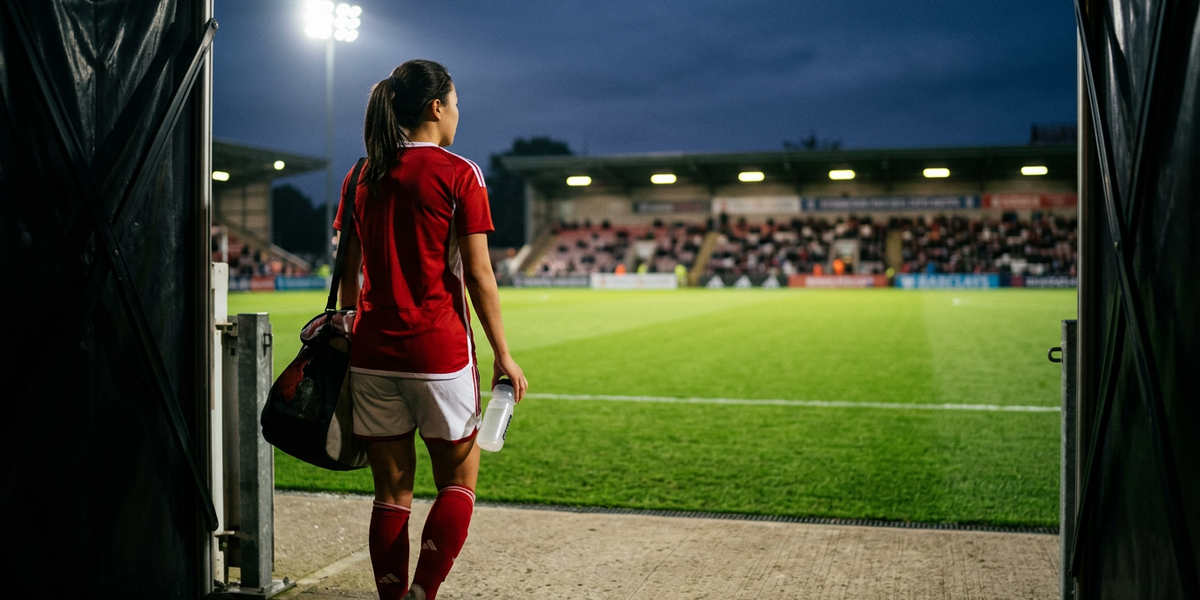
This is the practical, match day version. If you want the wider picture of how hydration works across a normal week and how to recognise dehydration, read our football hydration guide first. What follows assumes you already drink reasonably day to day, and focuses on the ninety minutes themselves.
Key takeaways
Match day hydration works best when the week before it was already sensible. Take the drinking opportunities the game gives you: warm up, half time, stoppages and breaks. Small, comfortable amounts beat forcing large volumes before kick off. Heat and humidity change everything, and heat symptoms are a medical issue, not a toughness issue. Replace fluid gradually after the game, alongside a normal meal.
Before kick off
The aim is to arrive at the ground already in a normal state, not to fix a week of poor habits in an hour. Have a drink with your pre match meal, keep a bottle with you on the journey, and take one more drink in the changing room. That is genuinely most of it.
Avoid the common mistake of drinking a very large volume shortly before kick off. It is uncomfortable, it does not store usefully, and taking on far more fluid than you need carries its own risk of diluting the sodium in your blood. Pale straw coloured urine before the game is a reasonable everyday sign that you are in a sensible place.
If you know it is going to be hot, plan your drinking opportunities in advance with your coach rather than improvising in the seventieth minute.
During the warm up
The warm up is an easy drinking opportunity that most players waste. Leave your bottle at the side of the pitch where you can reach it, and take a drink after the running section and again before you go back in. If the warm up is long or the day is hot, treat it as part of the match for hydration purposes.
Half time
Half time is the single biggest opportunity you get. Drink at a comfortable pace across the whole break rather than swallowing as much as possible in the first thirty seconds, which tends to cause stomach discomfort in the second half.
For most matches, water is fine. On long, hot, demanding days, or across a tournament with several games, a sports drink can be useful because it supplies some carbohydrate and sodium as well as fluid. That is a situational tool, not a daily habit, and for players under eighteen a parent or guardian and, where relevant, a qualified health professional should be involved in any decision about supplements or electrolyte products.
Stoppages, breaks and substitutions
Modern football gives you more chances than people realise: injury stoppages, substitutions, the ball out of play near your bottle, and formal drinks breaks in hot conditions. In youth football, coaches and referees can and should build in drinks breaks when it is warm.
Two habits help. First, know where your bottle is and make sure it is not in the kit bag on the far side of the pitch. Second, actually take the chance when it appears rather than waiting until you feel bad. Once you are noticeably thirsty and heavy legged, catching up mid match is difficult.
Playing in hot weather
Heat is where hydration becomes a safety issue rather than a performance one. In hot or humid conditions sweat losses rise sharply, and humidity makes it harder for sweat to cool you.
Take these signs seriously in yourself or a teammate: feeling very tired and weak, dizziness, headache, nausea, cramping, excessive sweating with pale clammy skin, or confusion. That picture can indicate heat exhaustion, and the NHS advice is to move the person somewhere cool, get them to lie down with their feet raised, get them to drink, and cool their skin. If they do not improve within thirty minutes, or if they have a very high temperature, become confused, stop sweating or lose consciousness, that is heatstroke and it is an emergency. Call 999.
No match matters more than this. Players should never be pressured to play on through those symptoms.
Do not overdo it
The other error, less common but real, is drinking far more than you lose across a hot day, particularly at tournaments where bottles are constantly available. That can lower blood sodium and cause nausea, headache and confusion. If you are drinking constantly and your urine is completely clear all day, ease off and eat a normal meal.
The sensible middle ground is unglamorous: drink at every natural opportunity, in amounts that feel comfortable, and eat normally.
After the game
Replace fluid gradually across the hours after the match rather than in one go, and do it alongside a normal meal, which supplies the sodium and carbohydrate your body wants back. Milk, water and food together do the job for the vast majority of players.
If you have another match the next day, this becomes more important, and so does sleep. If you finish a match feeling very unwell, unusually dizzy, or you pass dark brown urine afterwards, seek medical advice rather than assuming it will pass.
Related reading
Football hydration guide for the everyday picture and warning signs. Leg cramps in football for why hydration alone does not prevent cramp.
Sources and further reading
NHS: Dehydration NHS: Heat exhaustion and heatstroke NHS: Water, drinks and your health NHS: Salt in your diet NHS: When to use 111
This article is general information, not medical advice, and it does not replace individual guidance from your doctor, physiotherapist or a registered dietitian.