
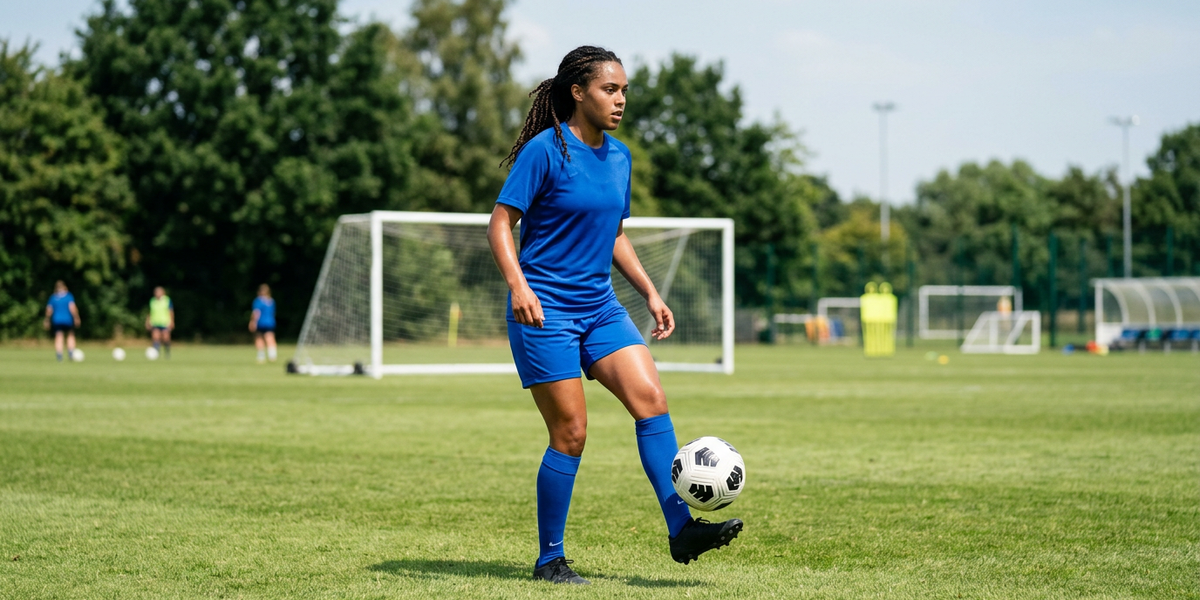
Youth wingers are not assessed the same way senior wide players are. At academy age, scouts are judging potential as much as current output, which means technical foundations, decision making and development stage often carry more weight than goals, assists or sprint numbers.
This guide covers what changes with age. If you want the general picture of the qualities scouts assess in any wide player, start with our main guide on what scouts look for in a winger, then come back here for the age specific detail.
Why youth assessment is different
A scout watching an under 13 game and a scout watching an under 21 game are answering different questions. The first is asking what this player could become in five years. The second is asking whether this player can contribute to a squad now.
That difference shapes everything. In youth football, clubs may accept a player who loses the ball often if the actions behind those losses show quality and bravery. At senior level, the same profile is usually judged on output. It is why a young winger should not measure themselves against senior benchmarks, and why being told to play safe at 13 is rarely good long term advice.
Physical maturation and relative age
Two players born in the same year can be a long way apart physically, and the gap can be wider still between an early and a late developer. Many clubs are aware of this. Assessment often tries to separate a player who is currently dominant because they are bigger and quicker from a player whose qualities will still be there when everyone else catches up.
What this means in practice:
- Being small or slow for your age group does not close the door. Technique, scanning and decision making travel with you as you grow
- Being big or fast for your age group is not a plan. If your game depends on running past players who are physically behind you, that advantage can disappear
- Late developers are sometimes released and later signed elsewhere. It happens often enough that a release at youth level should not be treated as a verdict
Scouts may also take birth month into account, since players born early in the selection year have often had more months of growth than those born late.
Technical foundations come first
At younger ages the technical base is what scouts can most reliably project forward. Things commonly looked at include:
- First touch under pressure, and whether it moves the ball somewhere useful
- Comfort receiving on the half turn
- Ball manipulation in tight areas rather than only in open space
- Willingness to use the weaker foot in a game, not just in training
- Whether the player attempts to beat opponents at all
That last point matters more than it sounds. A young winger who never takes anyone on is difficult to assess, and the habit of avoiding duels is harder to unlearn later than the habit of losing them.
What changes from under 12 to under 18
The qualities being watched stay broadly similar. The weighting shifts.
| Stage | What tends to carry the most weight |
|---|---|
| Under 12 to under 14 | Technique, coordination, willingness to attack one v one, attitude to learning |
| Under 14 to under 16 | Decision making, consistency, contribution without the ball, ability to cope as opponents get physically stronger |
| Under 16 to under 18 | End product, tactical discipline, defensive responsibility, reliability across a full season |
| Under 18 and above | Whether the player can affect a senior or reserve level game now |
Our stage guides go further on each: under 14 scouting, under 16 scouting, under 18 scouting and the academy pathway.
Decision making and game intelligence at youth level
Younger wingers are often judged on how quickly their choices improve rather than how good those choices already are. Scouts may watch whether a player repeats the same mistake for the whole match or adjusts after ten minutes, whether they scan before receiving, and whether they can play the simple pass when the dribble is not available.
Coachability sits alongside this. Response to instruction from the sideline, reaction to being substituted and behaviour after a mistake are all visible from a distance, and they are often noted, particularly in younger age groups.
Role expectations change too
Youth teams rotate players across positions on purpose. A player kept on one wing at 12 has usually learned less than one who has played both sides and sometimes inside. If you have played several roles, say so rather than hiding it. Flexibility at youth age is normally read as a strength.
By the later youth ages, clubs usually want a clearer picture: which side, which foot, and whether you are used to holding the touchline or coming inside. That clarity becomes more useful the closer you get to senior football.
What parents and players can control
- Play regularly at a level that stretches you rather than one you dominate
- Work on the weaker foot early, when habits are still forming
- Keep a simple record of the season: teams, level, minutes, goals, assists
- Film matches, not just goals, so movement and defensive work are visible
- Keep the information in one place a coach or scout can open quickly
A football CV does the last part. It is free for players and free for scouts and clubs, and it gives you one link to send. It does not guarantee trials or academy places, but it makes you easy to assess when someone does ask.
Frequently asked questions
At what age do scouts start watching wingers?
Clubs recruit across a wide range of ages, and there is no single starting point. Younger age groups are usually assessed on technique, attitude and potential rather than results, while older youth groups are judged more on output and consistency.
Does being small or a late developer stop you being scouted?
Not by itself. Physical development varies widely and many clubs try to account for it, which is why technical quality and decision making are weighted heavily at younger ages. It can make selection harder in the short term, which is why consistency over a season matters.
Should a young winger specialise on one side?
Usually not too early. Playing both sides and occasionally inside builds a wider skill set, and versatility is generally viewed positively at youth level. Clarity about your preferred side becomes more useful in the later youth age groups.
How is a youth winger assessed differently from a senior one?
Youth assessment leans towards potential: technical foundations, decision making, coachability and development stage. Senior assessment leans towards current output and whether the player can contribute to a squad immediately.
What should a youth winger show in a highlight video?
One v one attempts, goal involvements, movement without the ball and defensive work, kept short and clearly filmed. At youth level the aim is showing how you play, not only the moments that came off.