
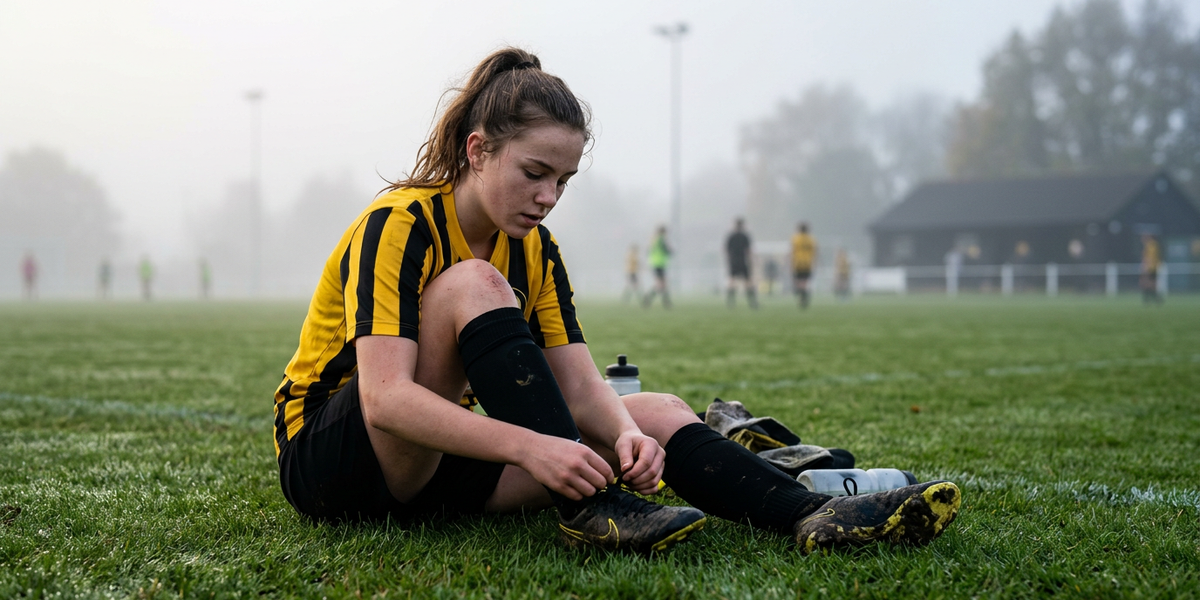
Halftime lasts about fifteen minutes, and a lot of that is taken up by walking off, listening to the coach and getting back out. It is a short top up, not a meal. The most useful thing you can do is have something small and familiar that you already know your stomach handles.
Key takeaways
Keep halftime snacks small, familiar and easy to chew. Never try a new food or drink for the first time on match day. Tolerance varies a lot between players, so test things in training. Drink to thirst rather than forcing large volumes in one go. Speak to a GP or a registered dietitian if you have a medical condition, allergies, ongoing stomach problems or unexplained fatigue.
Why halftime is only a short top up
Football is a stop start sport played at varying intensity, and by halftime many players have covered a good distance with repeated sprints. Anything you eat in the break has very little time to be digested before you are running again, so the aim is modest: take the edge off, get some fluid in, and avoid feeling heavy.
That is why halftime is not the place to fix a day of poor eating. What you ate at breakfast and through the day matters far more. If early kick offs are your issue, our guide on what to eat for breakfast before a football match is a better starting point.
Snacks that tend to work
Most players get on well with small amounts of simple, familiar food. Common options include a few orange or apple segments, half a banana, a plain cereal bar, a small handful of dried fruit, or a couple of plain crackers. None of these are magic. They are just easy to carry, easy to eat quickly and generally well tolerated.
Portion size matters more than the exact food. A few mouthfuls is usually plenty. Eating a full snack bar plus fruit plus a sugary drink in ten minutes is a common way to end up uncomfortable in the second half.
What to be careful with
Large portions, very rich or greasy food, and anything unusually high in fibre are the usual culprits behind stomach discomfort during exercise. That does not make them unhealthy foods, it just makes them a poor fit for a fifteen minute break.
We do not recommend energy drinks or supplements for youth players. Caffeine heavy drinks are not appropriate for under 18s, and supplements carry contamination and anti doping risks that are simply not worth it for a Sunday league second half. Ordinary food and water cover almost every situation.
Individual tolerance is the real rule
Some players can eat a banana at halftime and feel fine. Others feel queasy after anything more than a few sips of water. Both are normal. There is no single snack that works for everybody, and any article that tells you otherwise is guessing.
The practical approach is to test options during training or in less important matches, note what felt fine, and repeat that. Match day is not the time for experiments, especially before a trial or a game where scouts might be watching.
Drinks at halftime
For most matches in temperate conditions, water is sufficient. Drink enough to relieve thirst rather than forcing down a large volume in one go, which can leave you feeling sloshy. In hot weather, or for long tournament days, the balance takes a bit more thought, and our match day hydration guide covers that in detail.
Both dehydration and drinking far more than you need can cause problems, so aim for sensible rather than maximal. The broader picture is in our hydration guide for footballers.
Allergies, diabetes and other conditions
If you have a food allergy, always check labels and never share snacks from a team bag without knowing the ingredients. Carry any prescribed emergency medication and make sure a coach knows where it is.
If you have diabetes, exercise affects blood glucose in ways that are individual to you. Follow the plan agreed with your diabetes team rather than general advice from a football article. The NHS has practical guidance on exercise and sport with type 1 diabetes, linked below.
Younger players and parents
For anyone under 18, a parent or guardian should be involved in food planning for matches, particularly for tournaments and away trips. If a player regularly feels sick during matches, is often exhausted, is losing weight without trying, or has persistent stomach symptoms, that is a reason to book a GP appointment rather than to change snacks again.
Where a player has a medical condition, an allergy, a restricted diet or difficulties around eating, a referral to a registered dietitian is the right route. General articles cannot safely give individual amounts of carbohydrate, protein, sodium or fluid, and we do not attempt to.
Sources and further reading
- NHS: The Eatwell Guide
- NHS: Healthy eating for teens
- NHS: Water, drinks and your health
- NHS: Food allergy
- NHS: Exercise and sport with type 1 diabetes
This article is general information for players and parents. It is not medical or individual dietary advice. If you have a health condition or any concerns, speak to a GP or a registered dietitian.
Show your consistency, not just your snacks
Turning up ready week after week is what gets noticed. When you have footage and a record of your season, put it somewhere scouts can actually find it. You can build a football CV for free, and our highlight video tips will help you present your best moments clearly.